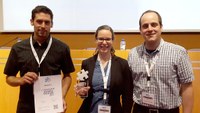
June 2026 has emerged as a period of great success at Idiap, with the Institute receiving several prestigious international distinctions across the fields of human–computer interaction, computer vision, robotics, and advanced industrial technologies.
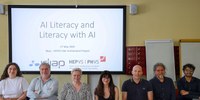
The University of Teacher Education Valais (HEP Valais) and Idiap have just completed a one-year research project aimed at gaining a better understanding of the state of AI literacy among the HEP Valais students and exploring how to effectively integrate artificial intelligence into the cantonal education ecosystem.
We are pleased to present our Annual Report for 2025.
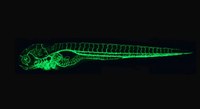
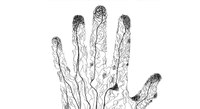
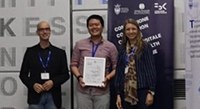
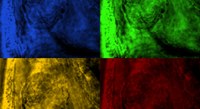
Ajinkya Kulkarni, postdoctoral researcher, has received a jury distinction at the 2026 SNSF Scientific Image Competition, recognizing both the scientific relevance and visual impact of his work.
Building reliable conversational AI systems—such as chatbots or virtual assistants like Siri or Alexa—is more challenging than it may initially appear. Although modern LLMs have improved dramatically in capability, researchers and developers still contend with a fragmented ecosystem. Datasets are often stored in incompatible formats, evaluation methodologies lack consistency, and reproducibility remains limited across studies and implementations.
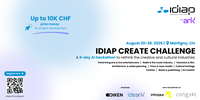
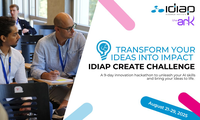
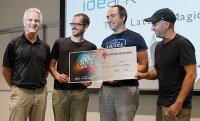
Idiap’s highly anticipated 9-day AI hackathon comes back from August 20 to 28, 2026.
The Institute has secured significant new competitive funding at national and European levels, reaffirming the excellence of its research in a challenging funding environment.
Ajinkya Kulkarni, a postdoctoral researcher at Idiap, has been awarded an SNSF Bridge Proof of Concept grant. His project addresses one of the fastest-growing threats in digital security: voice fraud. Audio deepfakes, AI-generated recordings that convincingly mimic real voices, are already being used for identity fraud, investment scams, and political disinformation.
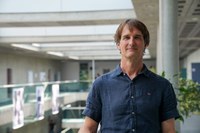
With a fast-growing community composed of a strong scientific and administrative staff, the Institute is looking for a new Director to lead and drive the Institute’s growth and advance its missions.
As conversations around artificial intelligence intensify worldwide, the documentary Wider Than the Sky, directed by Valerio Jalongo, invites audiences to reflect on the deeper implications of this major transformation.
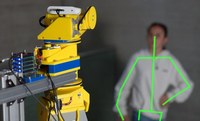
As wolf populations continue to expand across European mountain regions and into surrounding lowland areas, generating renewed challenges for both wildlife conservation and pastoral activities, the Idiap Research Institute and the OPPAL Association have joined forces to develop a non-lethal monitoring solution designed to prevent livestock predation.
In a rapidly evolving business landscape, companies are exposed to a wide range of risks, from market volatility to technological and environmental disruptions. To address this complexity, AI-driven tools are increasingly being adopted. A recent project supported by Innosuisse, carried out in collaboration with Basinghall Analytics, focused on advancing this approach.
Idiap’s scientific report is now available.
Several publications were recently presented at NeurIPS 2025, one of the premier annual conferences on AI and machine learning. They cover advances in face recognition, large language model (LLM) training, out-of-distribution detection, and bioacoustic analysis, reflecting the wide range of expertise at Idiap.
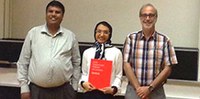
Idiap PhD graduate Anshul Gupta has received the 2025 PhD Thesis Distinction in Electrical Engineering (EDEE) from EPFL.
Idiap and EPFL have renewed their strategic alliance for the 2025–2028 period, further reinforcing a long-standing collaboration grounded in complementary expertise and shared objectives.
Idiap is delighted to welcome Elena V. Epure as a new Research Scientist beginning February 1st, 2026.
The Idiap Research Institute, in collaboration with the Universities of Lausanne and Neuchâtel, and cross-sectorial impact partners including the Initiative for Media Innovation (IMI), the public broadcaster RTS, Nagravision/Kudelski, and SICPA, have received support from the Hasler Foundation and the Mercator Foundation for an interdisciplinary project designed to reinforce the resilience of democracy in Switzerland as part of the "Digitalisation and Democracy" Program.
The Institute is delighted to welcome Janna Hastings as a new Senior Research Scientist, beginning January 1, 2026.
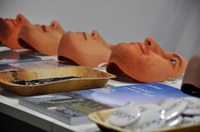
The Idiap Research Institute is collaborating on an ambitious multidisciplinary project that brings together biometrics, cultural history, and art history. The goal is to analyse and identify the faces depicted in 18th-century artworks, including a famous drawing by Jean-Étienne Liotard.
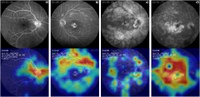
A joint research with the Jules Gonin Eye Hospital aims to develop a medical tool to evaluate patients suffering from uveitis, an eye condition that can cause severe visual impairment and potentially lead to blindness.
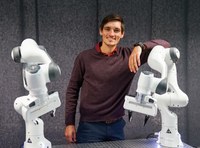
James Hermus, a postdoctoral researcher in the Robot Learning & Interaction Group at the Idiap Research Institute, has been awarded the highly competitive four-year Ambizione Grant from the Swiss National Science Foundation (SNSF).
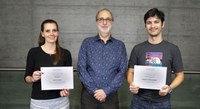
The IEEE Biometrics Council has recognized Hatef Otroshi Shareza, postdoctoral researcher in the Biometric Security and Privacy group at Idiap, with the Best Doctoral Dissertation Award for the outstanding quality and impact of his research.
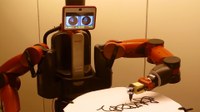
From September 26 to October 5, step into the fascinating world of artificial intelligence with drozBot, Idiap’s portraitist robot, at the Innothèque during the Foire du Valais!
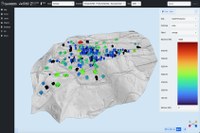
Idiap researchers Jerôme Kämpf and David Geissbühler together with HES-SO Valais/Wallis research scientists have conceived a platform to understand and manage energy consumption in Valais region of Switzerland.
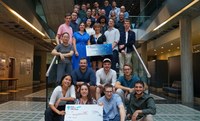
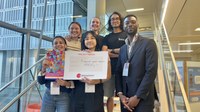
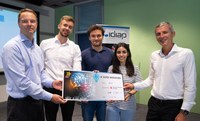
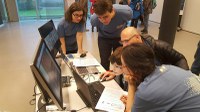
The 14th edition of the Idiap Create Challenge (ICC) concluded after nine days of intense coding, inspiring talks, and enjoyable social events.
Gaze is a fundamental indicator of attention and interest, and a non-verbal cue involved in communication and social signaling, a key element across various domains such as human-computer interaction, robotics, and medical diagnosis, notably in Autism Spectrum Disorders (ASD) assessment. Researchers at Idiap have developed AI systems that significantly improve 3D gaze estimation in real-world environments, enabling gaze-aware systems to operate in such situations.
James Henderson, senior research scientist at the Idiap Research Institute, has been awarded a prestigious Advanced Grant from the European Research Council (ERC) for his project BALM. This recognition highlights the excellence of his work in artificial intelligence (AI) and supports the development of innovative approaches in natural language processing (NLP).
We are pleased to present our 2024 Annual Report.
Oskar Wysocki, a postdoctoral researcher at Idiap, has been awarded a BRIDGE Proof of Concept grant and secured support from The Ark. These funds will enable the creation of his startup, which aims to revolutionize fleet management using AI.
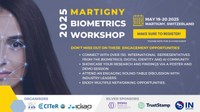
The Idiap Research Institute is hosting a major series of events from May 19 to 22, 2025, bringing together researchers, industry collaborators, and government agencies to discuss recent developments in biometrics and security.
Highly anticipated 9-day AI hackathon comes back at Idiap from August 21 to 29!
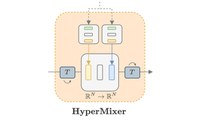
As artificial intelligence (AI) becomes more deeply embedded in everyday tech, from smartphones to medical devices, the demand for models that are not just powerful but also efficient and lightweight is rising fast. This is especially important in settings where computing resources are limited. To meet this challenge, Idiap researchers Mutian He and Philip Garner have developed a new agile method.
Starting April 2025, Idiap is on Bluesky, the social media that reminishes the early days of Twitter (today X).
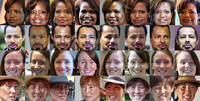
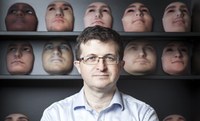
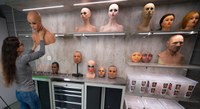
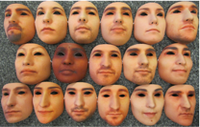
Face recognition is widely used today, from unlocking phones to enhancing surveillance systems. However, this technology often relies on large datasets of internet photos collected without consent, raising privacy and ethical concerns. To address this, researchers at Idiap have developed a synthetic (fake but realistic) face dataset, offering a privacy-friendly alternative without compromising model performance.
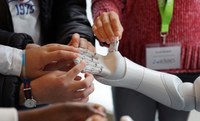
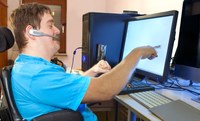
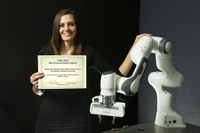
Robots designed to empower people with mobility disabilities are complex and difficult to adopt, as they require sophisticated movements to complete even basic tasks. At Idiap, researchers have developed a software that allows the robot to adapt to the unique needs of these people to provide a user-friendly experience.
Sébastien Marcel, senior scientist at Idiap, has been elevated to IEEE Fellow, effective January 1, 2025. The IEEE fellowship testifies “the advancement or application of engineering, science and technology, bringing the realization of significant value to society”[1].
We are starting the 2025 Idiap Distinguished Lectures with a special guest: Samy Bengio.
We are pleased to share our 2024 Scientific Report, highlighting key advancements across Idiap’s research programs: Human-AI Teaming, Sustainable & Resilient Societies, AI for Life, and AI for Everyone. Additionally, the report presents Fundamental AI advances across all programs.
Explore AI at Idiap's "Afternoons of Discoveries"! Interact with robots, visit some research labs, and much more!
Predicting and analyzing political bias, as well as checking the reliability of sources, could be a game-changing solution for professionals and organizations in a society where misinformation is a daily occurrence. This is what a team at Idiap, under the supervision of Dr. Petr Motlicek, has worked on by proposing a new approach to media information analysis.
The Idiap Research Institute is proud to announce the winners of the 13th edition of the Idiap Create Challenge (ICC), which took place from August 20 to 28. This hackathon, fully dedicated to artificial intelligence, brought together international developers and innovators eager to turn their ideas into prototypes.
Idiap Research Institute is thrilled to announce the 13th edition of its hackathon, a highly anticipated event that facilitates the translations of ideas into prototypes. This year’s hackathon, set to take place from August 20th to 28th, 2024, has received the highest number of applications ever, and promises to be one of our most exciting and competitive yet.
Doctolib, a major e-health European player, has announced the acquisition of Typeless, a spin-off from the Idiap Research Institute specializing in artificial intelligence-based voice recognition. This technological breakthrough was greatly facilitated by a year-long collaboration between Typeless and Idiap.
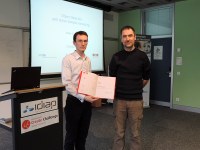
Tilak Purohit and Barbara Ruvolo, contributing to Idiap’s AI for Life research program, won the 1st prize at the Lemanic Life Science Hackathon organized at EPFL at the end of April 2024. The team also included EPFL Life Science bachelor's students Alexandra Psaltis, Jia Xian Jennifer Shan, and Elise Boyer Their outcome is an AI-enabled user interface prototype to support the detection of depression via speech.
We are thrilled to announce that, for the third consecutive year, the Idiap Research Institute will participate on May 14th in the annual Pint of Science Valais Festival, taking place from May 13th to May 15th 2024. This worldwide event, renowned for its commitment to making science accessible to all, aligns perfectly with the institute’s mission to engage and inspire the broader public about the potentials and advancements in Artificial Intelligence.
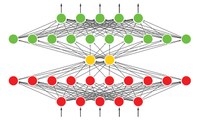
Understanding and explaining how AI works is key to build trust and have better human-AI collaborations. In partnership with researchers from Lausanne, Zurich, and Adelaide, our colleague Damien Teney published an article providing a fresh explanation of neural networks’ capabilities.
Each year the institute gives two awards to distinguish two of its students. In 2023, the Best Paper Award went to Tobias Löw, and the Student Award to Hatef Otroshi Shahreza. Congratulations!
Idiap and the 3D2cut company developed a system capable of identifying vines and of assisting pruning. A scientific publication resulted from this collaboration. This project was supported by the The Ark foundation for innovation in Valais.
Idiap researchers and their colleagues worldwide are investigating the generalization and personalization of models using mobile sensor data to infer people’s mood. A Distinguished Paper Award at the Ubicomp/ISWC conference recognized the scientific publication presenting this research.
In a systematic review, Idiap researchers analyzed urban data crowdsourcing platforms around the world. Their work highlights the growing role of these platforms to inform urban policies and shed light on the state of development of these tools.
In June, Dr. Matteo Sorci joined Idiap as Innovation Manager, bringing to the Institute his 14-year innovation expertise gained in the world of high-tech development and commercialization.
After nine days of intense work, Idiap Research Institute has announced the winners of the 12th edition of the Idiap Create Challenge (ICC) 2023. This artificial intelligence hackathon brought together engineers and creatives from several countries to transform their ideas into working prototypes with the help of the institute.
As artificial intelligence technologies reach everyday new performances, their energy cost is also increasing significantly. Idiap researchers are proposing a novel approach to address this challenge during a period of rising energy costs.
On 1 May 2023 the Board of Directors of the Swiss Academies of Arts and Sciences elected five new members to the Swiss Young Academy (SYA). With this election, the Academies acknowledge the ideas and commitment of the newly-elected members at the interfaces between science, society and politics.
Attracted to Idiap thanks to the Idiap Female Fellowship Researchers program, Raphaëlle Luisier has been promoted to permanent researcher at the Institute.
Idiap hosted a Biometrics Week. This one of a kind event gathered several hundreds of people from various backgrounds ranging from academia to industry. Organizers included the European Association for Biometrics and the US based Center for Identification Technology Research.
An Innosuisse project allowed Idiap to set up AI tools able to help experts to study the manufacturability of new aluminum elements requested by their customers.
The Idiap Research Institute uses signal processing and machine learning to design effective tools to improve people’s daily lives, especially those with communication difficulties. Ina Kodrasi, head of the Signal Processing for Communication group, is contributing to significant advances in the field of pathological speech.
Created in 2022, Cross Research Groups will foster collaborations between Idiap research groups. Their aim is to have long-term impacts on society thanks to an approach mixing both business oriented solutions and interdisciplinary scientific groundwork.
Luminous paints make it possible to tell the time on analogue timepieces even in the dark. These compounds are still applied manually, as conventional automation solutions are not suitable for this task. That’s why researchers from Idiap and Bern University of Applied Sciences BFH are developing a flexible robot system that can be programmed by showing it what to do.
Head of the Social Computing research group, Daniel Gatica-Perez has contributed to Idiap’s vision of Artificial Intelligence for Society since 2002. Last year, he received two awards recognizing his long-term impact at the interface between technology and society.
Every year, the Institute nominates two students for its internal awards. In 2022, the Paper Award goes to Alexandre Bittar, and the Student Award goes to Teguh Lembono. Congratulations!
In anticipation of the retirement of its current director, Hervé Bourlard, the Idiap Foundation Council is pleased to announce that Andrea Cavallaro will soon be taking over as director of the institute. He is also appointed full professor at EPFL’s School of Engineering.
Esau Villatoro, research associate at the Speech & Audio Processing group at Idiap, and his colleagues from the Mathematics Research Center (CIMAT) from Mexico have won first place in two competitions related to Natural Language Processing. The objective of these competitions is to improve important aspects of Mexican society such as tourism and communication.
Former Idiap PhD Angelos Katharopoulos has received EPFL's Electrical Engineering Doctoral program (EEDE) Thesis Award for his outstanding research on the efficiency of deep learning models.
Idiap researchers published a paper describing an approach to speech processing based on the properties of the human brain. Their method proved as efficient as the current standard, whilst conserving the advantage of energy efficiency. Moreover, their work is replicable thanks to open access software paving the way for future applications.
Accelerating the selection of potential sources of antibiotics using artificial intelligence is one of the goals of ABRoad. This project is the result of a partnership between InflamAlps, a pharmaceutical R&D company, and Idiap. Supported by The Ark Foundation, this innovative project aims to develop a digital platform enabling the selection of potential sources of antibiotics.
Originating from a paper published by Idiap in 2002, PyTorch is one of the most important and successful machine learning software projects in the world. The Linux Foundation announced that the hosting of PyTorch will transition from Meta to its own infrastructures. This new environment will continue to foster the open source spirit provided by Idiap’s original publication.
Bringing artificial intelligence and bioinformatics closer in Switzerland, Idiap and the Swiss Institute of Bioinformatics (SIB) signed a collaboration agreement. By becoming a partner institution of SIB, Idiap ensures its groups active in bioinformatics benefit from SIB’s national network of expertise, while enabling the SIB to access its 30 years of experience in AI research.
Team LaternaMagica is the winner of the 11th edition of the International Create Challenge that took place from August 16th to August 24th. This 9-Day AI Super Hackathon organized and hosted by Idiap aims to have teams that transform their idea into a prototype. This year the competition gave a special twist with two teams that took challenges proposed by BCVs.
Neural networks are often among cited technologies when it comes to artificial intelligence latest exploits. The downside is that this technology can be demanding in terms of energy costs. Two Idiap researchers demonstrated that in certain cases you should rather go for classical maths rather than for the AI hype.
In collaboration with a private company, Idiap researchers presented a novel approach to retrieve information from conversations’ transcripts. Their method uses both automatic speech recognition and natural language processing technologies.
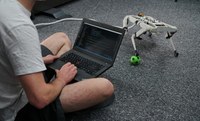
The Robot Learning & Interaction research group at Idiap has recently acquired a new tool. A small quadruped robot named SOLO12, whose mission will be to allow the researchers and engineers of the institute to develop new robotic applications based on artificial intelligence.
Researchers from Idiap, EPFL, Leuphana University Lüneburg, and UNIL published in Humanities and Social Sciences Communications results of their work conducted in the midst of the pandemic related lockdowns. Their paper highlights the potential for both theoretical and applied research.
Three new students joined the Genomics & Health Informatics group at Idiap. Coming from universities in Paris and Lausanne, they chose Valais to improve their skills.
Arriving in 2019 for a sabbatical year from the University of Mexico, Esaú Villatoro has now been working at Idiap for more than two years. Between publishing his work and adapting to Swiss life, he looks back on his experience at the institute.
Institute’s researchers in biometrics developed tools for more efficient and more reliable facial recognition techniques in the automotive industry. They made available their results open source.
Idiap Research Institute and the School of Engineering at EPFL invite applications for the directorship of Idiap. The successful candidate will also hold a faculty position as full professor at EPFL School of Engineering.
The Institute nominates every year two students for its internal awards. In 2021, the Best Paper Award goes to Suhan Shetty, and the Best Student Award goes to Parvaneh Janbakhshi. Congratulations!
Results from our Genomics & health informatics research group, in collaboration with the Francis Crick Institute in London, describe the use of a computational analysis method to classify images of healthy and affected by amyotrophic lateral sclerosis (ALS) motor neurons. This new technological breakthrough allows a better understanding of the disease and provides guidance for lab research.
Access to information is a challenge for disabled people, even at a time when communications channels are increasing. An international consortium gathering researchers, as well as private and public partners, under the leadership of the University of Zurich and including Idiap and Icare from the French speaking side of Switzerland was granted 6 million Swiss francs from Innosuisse—completed by 6 million from private partners—to take up this challenge.
The lack of representativity in databases used to train facial recognition tools often creates biases. Creating a repository of fake faces can resolve these biases. Financed by the Hasler Foundation and under the supervision of Idiap Research Institute, the SAFER project gathers the University of Zurich and the company SICPA.
Head of the Computation, Cognition & Language Group at Idiap, Lonneke van der Plas was nominated professor by the University of Malta. She is affiliated to this university since 2014.
The institute was inspired by the Swiss apprenticeship system to create its Masters in Artificial Intelligence, now it decided to train classic apprentices. Yana and Mattéo, our two apprentices, just started at Idiap.
Head of the Biometrcs security & privacy research group at Idiap, Sébastien Marcel was appointed Professor at School of Criminal Justice (Ecole des Sciences Criminelles) of the University of Lausanne from September 1st. His nomination is strengthening an already deep rooted collaboration between the two institutions.
Students from the Master’s AI completed the program offered by Idiap and Swiss Distance University. Thanks to their project integrated in a company, many of them are receiving job offers from their host company. This approach also fits businesses looking for digital skills.
Awarded in the speech and audio processing field, this prestigious prize was jointly awarded to Prof. Hervé Bourlard, Idiap’s director and head of the Speech & Audio Processing research group, and his colleague Prof. Nelson Morgan from the Berkeley University (USA).
Associated since Idiap’s creation in 1991, EPFL and the Institute have strong links. The new strategic alliance strengthens these links in the research, education and technology transfer areas.
Artificial intelligence and big data pioneers Octopeek (France) and Idiap announce a partnership. A member of Octopeek’s scientific staff will spend four years at the very heart of Idiap, culminating in a PhD—a unique opportunity to use video data to develop research on multimodal learning, and to spur innovation.
Thanks to a significant multi-million budget increase during the 2021-2024 period, Idiap’s new strategy will create over 60 highly skilled jobs, and interdisciplinary research groups dedicated to technology transfer towards businesses. This program is possible thanks to the support of the Canton of Valais and the Municipality of Martigny.
After spending almost 13 years with us, François Fleuret is appointed professor at UNIGE. To allow him to maintain his link with our institute and in recognition of his contributions, he is also appointed as an external member researcher of Idiap.
The Speech and audio processing group at Idiap, in collaboration with Swisscom, improves Swiss-German speech recognition for the voice assistant of the Swisscom TV Box through a multi-dialect approach.
Idiap researchers published the results of a study showing that analyzing pictures and audio from voluntarily recorded videos thanks to an app helps to determine with more objectivity the context of alcohol drinking among young people.
Thanks to her master's degree in AI and her internship in the Genomics & health informatics group, Colombine Verzat discovered that she particularly enjoyed implementing research in applied projects. We look back on her journey and how this master's degree allowed her to highlight what she really wanted to bring to the world of research.
Always observe what’s smaller while maintaining the highest image quality possible. This requires ever more powerful microscopes, but computational methods can also do it. This is the subject of the thesis that Olivia Mariani successfully defended.
Perfect understanding of a text is not possible without context. Same goes for a computer. It cannot do a good translation without understanding what is really defined in a text. At Idiap, Lesly Miculicich conducted research to make this possible through her thesis which she successfully defended last February.
Since his arrival at Idiap 20 years ago, Sébastien Marcel is shaking up the research community in biometry. After several major projects and a long term hard work, the researcher established the bases for a new biometrics standard.
Idiap is developing its research capacities by hiring four new senior researchers. Two women and two men, whose goal will be to work on topics with great potential in AI and to continue to progress in areas that have already contributed to the reputation of the institute.
Communications play a key role to share scientific breakthroughs and highlight researchers work. To follow Idiap’s growth, a new team member is joining the institute he knows for many years thanks to his internships.
Following an external audit, the Institute was declared to be an equal salary employer. Including more diversity remains an important goal for Idiap, as our professional environment suffers from a lack of diversity on the global scale.
Ranging from bikes to cars, batteries are a key element of the electric mobility. Managing the autonomy of these vehicles is challenging. Using machine learning and smart scooters, Idiap researchers intend to enhance battery charging plans for a better mobility experience.
To face the increasing use of biometrics systems, Android set up its own certification standard. The biometrics center of Idiap became accredited to deliver certificates meeting these standards. This competence builds up on the FIDO accreditation obtained in 2019.
Coordinated by Idiap, the Roxanne project aims to introduce AI technologies for law enforcement agencies. A few days ago, criminal investigation TV series were among the first data sets used to demonstrate early technologies developed by the project partners.
The first intake of students of the on-the-job Master in artificial intelligence just graduated. Offered by Idiap Research Institute and Swiss Distance University Institute, this curriculum allowed an engineer from Syngenta to become the artificial intelligence specialist to support the digital evolution of the production site.
Human-robot interactions are often lacking fluidity, especially outside of the lab. Today, researchers from Idiap are publishing in open access the algorithms which allowed a robot to be used in real conditions in a shopping mall in Finland in the framework of the European project Mummer.
A joint study by Idiap Research Institute, EPFL, and the University of Lausanne’s Institute of Psychology has provided us with a unique snapshot of how Swiss residents experienced the partial lockdown measures resulting from the coronavirus pandemic. The findings include gender disparities, doubts about the future and hopes for change.
To diminish facial recognition biases, data sets of representative pictures are necessary. Idiap decided to go a step further by participating in the creation of an ethical data set of pictures.
The increase of the number of employees incited Idiap to recruit its own caretaker. Supported by two helpers for cleaning, he takes care of the building to keep it clean and welcoming. We followed him backstage to discover his work.
The European project AI4MEDIA will start in September and gather 30 partners. Idiap and HES-SO Valais-Wallis are part of it. Researchers and media actors want to contribute to a more ethical artificial intelligence in the field of medias.
A nationwide study aims to understand the emotional effects of the lockdown on Swiss residents and what steps they are taking to cope with it. Thanks to an app developed at Idiap, this study will be able to gather the opinions of people over time.
With one million Swiss francs budget and supported by the Innosuisse agency, the CANDY project will develop and patent a contact-less scanner allowing to identify people using the venous patterns of their hands. The project is a collaboration between the Global ID start-up and Idiap Research Institute.
The European Association for Biometrics organized its workshop at Idiap. European researchers and representatives from various companies gathered to discuss presentation attack detection.
The shortage of skilled people in computer science is more prominent now that recruitment for some jobs is done at the international level. Idiap is investing in the next generation of women in order to compete.
First contact when you arrive at Idiap, the secretariat is in charge of the administrative tasks: from human resources to accommodation management for researchers. Departing Nadine Rousseau had to share her 23 years of experience with Laura Coppey.
Artificial intelligence technologies could further unlock the potential of genetics for health. Raphaëlle Luisier started a new research group at Idiap with that aim in mind.
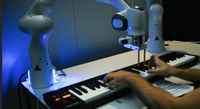
Collaborative robots are the perfect tool to link art and science. Thanks to his visit at Idiap, a researcher from Goldsmiths University of London used this approach to demonstrate the concept with a piano.
At the end of the year, the Institute is awarding two honors: the student award and the paper award.
This National Science Foundation (NSF) initiative invites industry players to join forces in a cooperative effort to support and drive high quality research in biometrics and in return, to have privileged access to the developed technologies. Idiap hosts the first non-US site.
Full time professor in Mexico, Esaú Villatoro is on sabbatical year at Idiap. He aims to develop a project in the Natural Language Understanding field with different researchers from the Idiap Research Institute.
The Conference on Robot Learning (CoRL) awarded the best presentation award to Noémie Jaquier. In collaboration with the Bosch Center for Artificial Intelligence (BCAI), she presented a paper which highlights how mathematics and machine learning can help to find solutions to problems in robotics.
The system and infrastructure team is Idiap’s Swiss knife. They work on optical wire installation; they manage computing hardware; they plan our energy supply… Samuel Aymon just joined the team.
Coordinated by the Idiap Research Institute, the European project Roxanne gathers a large variety of national and international police forces, including Interpol, as well as scientists, large industry and private companies. Its aim is to create a computer programme able to help investigators to link various clues and uncover criminal network activities.
The ETH Board appointed a total of 25 professors in various fields. Among the nominated scientists, François Fleuret, head of the Machine Learning in our Institute.
It took the know-how of the cheese Master Eddy Baillifard, founder of Raclett’House, and the expertise of the Robot learning & interaction group from the Idiap research institute to achieve the first raclette made by a robot. Beyond the technical challenge, the project shows the potential of learning from demonstration techniques and for a better human-robot collaboration.
In the face recognition research field, new challenges are going harder as the field limits are expanding. Tiago de Freitas Pereira award from the European Association for Biometrics is a significant recognition for his work during his thesis.
Winners of the International Create Challenge (ICC) share a common will to use artificial intelligence for day to day applications. Particularly cosmopolitan, the 2019 edition illustrates the significant potential for business creation in these areas.
The Idiap research institute from Martigny held its traditional Innovation Day on August 28th. The researchers presented how cutting edge technologies, such as artificial intelligence, biometrics or robotics can be transferred into the business world.
Stepping down as CFO, Ed Gregg was an actor and witness of Idiap's evolution over the last 15 years. Beyond his managerial role, known for his rigor, he knew how to discreetly bring his personal touch to the institute.
Bob is a signal-processing and machine learning toolbox originally developed by Idiap Research Institute. Upgrading from version 5 to 6, the last release of Bob is offering some important improvements with a focus on video support.
Robots often lack flexibility to meet the needs of today’s small production cycles. Thanks to the European H2020 project called Collaborate led by the Aristotle University of Thessaloniki in Greece, our institute will contribute to improve collaboration between robots and humans.
The Embassy of Switzerland in Spain is organizing each year a Swiss Innovation Night. This year was under the title "Impact of Artificial Intelligence in Society". Our institute was among the representatives to share its research.
Idiap’s researchers received the best paper award from the AI Foundation at the prestigious International Conference on Machine Learning 2019. Their work focused on methods to detect audio-visual inconsistencies in fake videos.
Idiap researchers are looking for volunteers to test security systems. Their aim is not only to detect potential vulnerabilities, but also to reinforce security of private data. To achieve this goal, their challenge is to create a panel representing human diversity.
Idiap’s Social Computing Group received a paper award at Pervasive Health 2019. Their research focused on drinking practices pictured on Instagram and classified thanks to hashtags, images, and artificial intelligence.
The reference in authentication standards, the FIDO Alliance has confirmed the accreditation of Idiap’s Biometrics Center as only the third member of a what remains a very exclusive club, placing it at the heart of those security issues that make up the sensitive and fast-growing domain of biometric certification.
The prestigious International Association for Pattern Recognition (IAPR) bestowed it Best Paper Award during its International Workshop on Biometrics and Forensics. Idiap Biometrics security and privacy research group was among the authors of the awarded paper.
Artificial deep neural networks are a powerful tool, able to extract information from large datasets and, using this acquired knowledge, make accurate predictions on previously unseen data. Due to the very large number of parameters required, they are also particularly difficult to understand.
The Perception and Activity Understanding group presents the unified system of visual, audio, and non-verbal perception that is currently used within the MuMMER.
Christian Jaques, a researcher in the Idiap’s Computational Bioimaging Group and PhD student in electrical engineering at EPFL was awarded the Best Student Paper Award at the latest IEEE International Symposium on Biomedical Imaging.
On May 7th 2019, Idiap will be hosting the “Artificial Intelligence & Energy” Symposium. Organized by the Centre de Recherches Energétiques et Municipales and the Idiap Research Institute, this event aims to open new perspectives in the energy research field.
On April 4th 2019, Skanda Muralidhar obtained the PhD degree at EPFL after successfully defending his thesis, advised by Prof. Daniel Gatica-Perez at Idiap’s Social Computing group
Recognized for his outstanding contributions to the field of Web and Knowledge Engineering, Multimedia, the head of Idiap’s Social Computing group is among the most influential researchers according to the AMiner platform.
Idiap’s new Financial Manager, Christophe Rossa, explains us the challenges and specificities of our institute financial aspects. Discover how his 10 years’ experience managing a casino finances is an asset for the Institute.
To keep the pace with its research, our institute must be able to have a particularly fast internet connection. Idiap is currently undergoing a massive upgrade of its own network. Thank to optic fibre and new wires the network speed will increase by a factor ten.
How to empower communication among people through technology that is aware of diversity? To achieve this goal, the WeNet European project will develop a platform to connect people using ethical principles and artificial intelligence technology. Idiap is part of this project.
Following a comparable path, robots could learn to move and walk as human being do. The goal of the MEMMO project is to develop a unified approach to motion generation for complex robots with arms and legs.
Artificial intelligence is going back to school: Monday, February 4, 13 students upon selection are beginning their new master integrated within a company. In this new role of employee-student, they will allow their employer to acquire skills at the forefront thanks to Idiap.
How to transport a given amount of resources from point A to point B at minimal cost?
A Chinese delegation from the Ministry of Industry and Information Technology of China had meet with Swiss representatives for innovation. Idiap was among them.
The use of graphic interfaces is a common ground in today’s software. The Qt – read it as cute – Project is working to maintain and develop an open source framework that helps build Graphical User Interface and much more. Idiap is now an official contributor to this effort.
3D eye tracking startup Eyeware closes its first round of CHF 1.9M in venture funding.
Idiap’s teams are happy to wish you a merry Christmas and and all the best for this new year!
The best PhD student research and the best PhD student paper were awarded to Tiago de Freitas Pereira and Yu Yu. They received their prizes from Idiap’s director.
How to save energy, fight climate change and improve your energy supply? Be smart and use artificial intelligence. To achieve this goal Idiap Research Institute created a new research group in Energy Informatics in collaboration with the Centre de recherches énergétiques et municipales (CREM) dedicated to research in the energy field and local communities.
The shortage of computer developers is impacting many sectors. Increasing the share of women in this area would partly address this shortage. Idiap is committed in this direction by raising girls' awareness and proposing a fellowship program for female researchers.
Researchers from Idiap Research Institute have carried out a study using smartphone data from young Swiss people to better understand the circumstances in which they are most likely to drink. A computer model developed based on Artificial Intelligence can estimate, with over 75% accuracy, whether alcohol was consumed on a given weekend night.
Digitalisation is impacting every business, from tourism to energy. Artificial intelligence (AI) is one of the tools that can provide a strategical asset to businesses, but the lack of experts can be a limitation when it comes to using such technologies. Thanks to the first master in AI tailored for companies’ development and in collaboration with Swiss Distance University and the Canton of Valais, Idiap Research Institute is offering a brand new solution which also creates new jobs. The target audience for this master is very broad, not only targeting the Canton of Valais.
Technology transfer is much more than an office dedicated to industrial relations. The TTO is one of the many assets of Idiap. Interview with Joël Dumoulin, a man wearing multiple hats.
Adrian Shajkofci, a PhD student in the Computational Bioimaging Group, co-advised by Michael Liebling and François Fleuret received a "Best Student Paper Award" at the 25th IEEE International Conference on Image Processing (ICIP), on October 9th 2018. This event is the world's largest and most comprehensive technical conference focused on image and video processing and computer vision. The 2018 theme was "Imaging beyond imagination".
Neil Lawrence, Director of the Machine Learning of Amazon hub in Cambridge is a new member of the Idiap Research Institute International Advisory Board. His experience and expertise will be an asset for Idiap.
The Perception and Activity Understanding group attended the IEEE International Conference on Intelligent Robots and Systems (IROS), in Madrid.
From European projects to intellectual property, meet Idiap’s legal advisor, Marie-Constance Landelle, whose work allows to improve Institute operations and to face new challenges.
A virtual coach to help you to write an email that can be misinterpreted or to help cricket players to enhance their performances. Those are the projects based on Artificial Intelligence and awarded by the Idiap Research Institute.
The Innovation Day 2018 took place in Martigny (Valais) on August 29th and has been covered by multiple Swiss media.
How to use artificial intelligence to analyse blood samples or to detect when a child is accessing an inappropriate website? Here are some of the projects submitted for the International Create Challenge (ICC) 2018 hosted and supported by Idiap until September 18th.
The Urbis project, which is a collaboration on citizen participation and mobile crowdsourcing between IPICYT Mexico and Idiap, was presented at the First National Forum on Science, Technology and Innovation in Mexico City on August 8 2018. The event was organized by the National Council of Science and Technology.
What if artificial intelligence could analyze an electro-cardiogram (ECG) or a medical image scan and highlight results that physicians should be looking at in priority? Thanks to signal and image processing, and machine learning techniques, that is the goal of the new Biosignal Processing Group at the Idiap Research Institute.
The 35th edition of the world renowned International Conference on Machine Learning (ICML) was held a few days ago in Sweden.
L’Idiap et sa spin-off Recapp sont sortis vainqueurs d’un défi de reconnaissance vocale lancé par Swisscom et l’opérateur téléphonique belge Proximus.
Interview with Nicolas Filippov the new head of communications, marketing and public relations of the Idiap Research Institute.
Prof. Daniel Gatica-Perez (Social Computing Group) talks about social media, machine learning, and diversity with Amenaza Roboto, the new platform for science and technology journalism in Spanish.
Idiap is happy to present the new edition of its 2017 Annual Report.
This year, Idiap will be exceptionally well represented at the conference, with 14 accepted papers.
Interpol’s New Software Will Recognize Criminals by Their Voices
The paper "Deep Neural Networks for Multiple Speaker Detection and Localization" by Weipeng He, Petr Motlicek and Jean-Marc Odobez shows that the deep learning-based method achieves 90% precision and recall for localizing multiple speakers in real robot recordings.
Idiap organizes the International Create Challenge (ICC) since 2012. For its 7th edition, Groupe Mutuel has joined the Institute from Martigny, offering a new optional theme: Do you have an idea/project in the healthcare/insurance domain? The HealthTech Innovators Award (up to 15K chf) by 'Groupe Mutuel' might be for you.
On Friday, May 4th Idiap’s Deputy Director, François Foglia, visited 5 school classes of the Cycle d’orientation of Montana in Valais.
Idiap has opened two new programs: Idiap Academic Visitor Program and Idiap Fellowship Program for Female Researchers
On Wednesday, April 25th, CREM organised a seminar on territorial energy systems at the Idiap Research Institute. Multiple speakers presented their research work on the topic.
The 7th edition of the International Create challenge is looking for new ideas in the fields of Artificial intelligence. A cash prize of CHF 15’000 awaits the winning teams.
The 3rd edition of the Valais/Wallis workshop in Artificial Intelligence was held at the Idiap Research Institute in Martigny, on April 19th, 2018. The focus with this edition was on “Real and artificial neural processing” and attracted about 70 people.
Barbara Caputo, a former Idiap senior researcher, teaches robots to learn for themselves, from the Internet. Her RobotExNovo project has brought her the prestigious ERC Starting Grant funding of EUR 1.5 mio from the European Council.
For this third edition, the focus will be on “Real and artificial neural processing”.
Developped by the start-up Global ID, Idiap and HES-SO Valais, a new biometric identification system will soon be available at a good price. This technology should be especially interesting for emerging countries.
Supported by the SenseCityVity research team in Mexico and Switzerland in 2017, the project "Education for Water Protection in Colombia" will participate at the 8th World Water Forum in Brasilia (March 2018), with additional support of the OEI (Organizacion de Estados Iberoamericanos para la Educación, la Ciencia y la Cultura).
This type of loan is granted to promising young companies of Western Switzerland in phase of prototyping and commercial development. Since 1994, the FIT has financed innovative technological projects and startups with a total of 33 million Swiss francs of loans and grants. These companies have created more than 1000 jobs in Switzerland so far.
In January and February 2018, Dr. David Ginsbourger, head of Idiap's Uncertainty Quantification and Optimal Design group, has been invited by the prestigious Newton Institute of Cambridge to give two talks.
Jobs, economy, recognition systems, machines capable of learning on their own: Artificial Intelligence is about to revolutionize our society. Science progresses and the wide public is aware of these revolutions.
For the 6th year in a row, Bilan magazine published its selection of the 50 Swiss start-ups to invest in. This year, three start-ups from Valais, chosen for their particularly innovative technologies and promising business plans, figure on the list.
The TACT-HAND project in which Idiap participates was featured in the annual magazine Micro&Nano (p.42-43) from Micronarc, the Western Switzerland Micro-nanotech Cluster:
Researchers at Idiap and EPFL have been working with psychologists to understand how people form first impressions from photos. They focused on how people respond to properties available on Airbnb. Better analysis of human behavior should allow scientists to program machines capable of making more “human” decisions.
On Monday Feb 6th, ams, a worldwide supplier of high performance sensor solutions, announced the acquisition of KeyLemon for an undisclosed amount [1].
The thesis presents generative mixture models for learning robot manipulation skills from a few human demonstrations, and providing assistance to a human operator in performing these skills at a distance under limited bandwidth and communication delays. The models are based on invariant task-parameterized representations of hidden semi-Markov models that allow segmentation and reproduction of manipulation skills, while generalizing effectively across different environmental situations such as size, position, and orientation of objects in the environment.
David Ginsbourger, head of the Uncertainty Quantification and Optimal Design group at Idiap Research Institute was awarded a professor title by the University of Bern with effect from February 1st 2018.
Following a very strict evaluation process – comprising the nomination by Idiap's management and a formal approval by the Scientific College - , Idiap is pleased to announce the promotion of three of its researchers to Senior Researchers:
An article, co-authored by Prof. Andrei Popescu-Belis, has received the Best Paper Award at the International Joint Conference on Natural Language Processing (IJCNLP). The article presents the research of Dr Nikolaos Pappas - a postdoc at the Idiap Research Institute in Martigny - under the supervision of Prof. Popescu-Belis, former head of Idiap’s Natural Language Processing group.
Secure access to computers thanks to facial and voice recognition software on the cutting edge of technology; develop an active principle based on Alpine herbs that allows limiting oxidation of natural cosmetic products or enhanced solar energy by means of new battery chargers... Valais possesses all the ideal structures for research, development and valorization of innovative projects. 11 fundamental research chairs, 10 applied research institutes, 6 technological sites for the development of projects and 1 economic development tool: Valais, innovation accelerator!
For many years the Idiap research institute has worked on reproducible research and developed several tools for this such as Bob or the BEAT platform.
The Idiap collaborators can now register to the Idiap Alumni LinkedIn group
The work by Trung Phan and Daniel Gatica-Perez (Social Computing Group) on analysis of Instagram patterns of food consumption in Switzerland was covered in Swiss news:
Idiap is proud to award James Newling and Gulcan Can for their outstanding work.
David Ginsbourger is invited to take part in the Isaac Newton Institute programme "Uncertainty quantification for complex systems: theory and methodologies" (3rd January 2018 to 29th June 2018). He will stay in Cambridge for several weeks distributed over January-February and April 2018.
Dr Sébastien Marcel, one of the Idiap senior researcher and head of the Biometrics Security & Privacy group, has been elevated by IEEE to IEEE Senior Member.
Prof. Daniel Gatica-Perez (Social Computing Group) gave a talk about his work in Latin America and Switzerland at the First European Seminar on Urban Data Science in Amsterdam.
James Henderson, who has joined Idiap in September 2017 and is now leading Idiap's Natural Language Understanding group, has recently been appointed as Action Editorfor the "Transactions of Association for Computational Linguistics (TACL)" journal.
The paper "Multilingual Hierarchical Attention Networks for Document Classification" by Nikolaos Pappas and Andrei Popescu-Belis has received the Best Paper Award at the 8th International Joint Conference on Natural Language Processing, held on November 27-December 1 in Tapei, Taiwan.
This thesis presents visual analysis methods for complex ancient Maya writings, specifically a promising crowdsourcing approach to build a large glyph dataset, competitive data-driven visual representations, and interpretable visualization methods that can be applied to explore various other Digital Humanities datasets.
LYON, France – In its final field test, the Speaker Identification Integrated Project (SiiP) successfully demonstrated the system’s innovative capabilities as language independent voice recognition system.
Moka Studio is born in Martigny Valais in 2009.
The SWISKO project, in which Idiap's Social Computing Group participates in collaboration with DomoSafety SA, the University of Bern, La Source School of Nursing Sciences, and the Home Care Association of the Canton of Neuchatel (NOMAD), was featured in the Magazine ASD (Aide et Soins a Domicile).
The Valais/Wallis workshop on Artificial Intelligence 2 was held in Martigny at the Idiap Research Institute on November 10th 2017.
David Ginsbourger is invited to give a talk at BayesOpt 2017 ("Bayesian optimization for science and engineering"). The workshop will take place in Long Beach, USA, on the last day of the NIPS conference (December 4-9 2017).
The Idiap Research Institute develops a new imaging system for research. The precision instrument has been built together with the air base of Sion and could be used by companies and the Universities of Applied Science of the Canton.
Koemei (former Idiap start-up) technology is now branded SPEXIAN.
Thales has selected nine startup companies to join a six-month, cybersecurity-focused business development program led by the company at the Station F startup campus in France.
The Steering Board of the ACM International Conference on Multimodal Interaction (ICMI) has announced that the recipient of the 2017 Community Service Award is Prof. Daniel Gatica-Perez, Head of the Social Computing Group at Idiap.
The paper of Noémie Jaquier, Mathilde Connan, Claudio Castellini and Sylvain Calinon from Idiap Research Institute and DLR-German Aerospace Center, "Combining Electromyography and Tactile Myography to Improve Hand and Wrist Activity Detection in Prostheses", has been posted on /Technologies/ journal social media platform.
David Ginsbourger is invited to give a talk at the 9th Trondheim Symposium in Statistics. The symposium will take place 6-7 October, 2017, at Baardshaug (https://baardshaug.no/).
Pour les jeunes valaisans de 11 à 16 ans le mercredi 4 octobre après midi à la Foire du Valais à Martigny, salle Vaisons la Romaine.
CREALOGIX purchases the cutting-edge artificial intelligence (AI) technology of Koemei. The solution, developed by the Swiss start-up and spin-off of the Idiap Research Institute, enables the automated conversion of audio and video content into text data for analytics and optimisation, thanks to machine learning technology. This makes it easier to exploit multimedia content. As a result, data categories that are set to grow massively in the future and whose analysis is still largely neglected by companies today, can be used efficiently. Extensive concept search as well as usage analytics further simplify handling. With these innovative AI functions, the digital banking and digital learning specialist is complementing its existing digital product portfolio.
On Tuesday, September 19th, after three weeks of hard work and networking, the ICC’2017 participants found out which teams the jury had selected among the winners of the challenge. The organizers of the ICC’2017 are proud to announce the following winning teams:
More than 300 people attended the forum and the 6 workshops have kept their promises.
Pepper, a robot of Idiap Research Institute, had the chance to present its point of view about Artificial Intelligence.
For this second edition, the focus will be on challenges and opportunities of "Small data". This interdisciplinary event will gather speakers and participants having to cope with small data with motivating applications in environment and geosciences, medicine, energy engineering, robotics and beyond.
Prof. Daniel Gatica-Perez recently presented the civique.org platform in local and international events.
An ICC'2017 participant, EyeViewPost-it, has been chosen to present its idea to a large audience at the TEDx Martigny Friday September 8, 2017.
The forum will take place on September 15th, 2017 at the hotel Vatel in Martigny.
The work described in this thesis takes place in the context of data-driven integration of linguistic knowledge and acoustic information for the pronunciation lexicon development.
The Idiap Research Institute published a paper in the International Conference on Machine Learning on a new Open-Science Web Platform.
The talk will take place at Idiap at 14H00, conference room 106
The DexROV team has just completed a 2 weeks long campaign of integration and tests in the DexROV project, with a satellite link established between Brussels and Marseille to enable far distance monitoring and control of an underwater robot.
The Idiap Research Institute has signed a new research agreement with BBC to evaluate the speaker recognition technology developed by the biometrics security & privacy group.
The Prof. Bart Vandereycken from the University of Geneva will give the talk entitled: Algorithms on manifolds: geometric means and recommender systems.
Dr Sylvain Calinon received the 2017 Best Paper Award of the Intelligent Service Robotics (ISR) journal for his article "A Tutorial on Task-Parameterized Movement Learning and Retrieval".
Matthias Vanoni, founder of Biowatch, participant and winner of the ICC'2014 International Create Challenge.
When speech processing systems are designed for use in multilingual environments, additional complexity is introduced. Identifying when language switching has occurred, predicting how cross-lingual terms will be pronounced, obtaining sufficient speech data from diverse language backgrounds: such factors all complicate the development of practical speech-oriented systems. In this talk, I will discuss our research group's experience in building speech recognition systems for the South African environment, one in which 11 official languages are recognised. I will also show how this relates to our participation in the BABEL project, a recent 5-year international collaborative project aimed at solving the spoken term detection task in under-resourced languages.
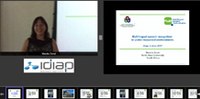
The Prof. Marelie Davel will give the talk entitled: Multilingual speech recognition in under-resourced environments
Michael Liebling has been appointed Adjunct Professor in the Department of Electrical and Computer Engineering at the University of California Santa Barbara (UCSB).
Charisma has been devilishly difficult to measure; there has also been a dearth of studies estimating the causal impact of charisma on outcomes. In this seminar I will use a new definition of charisma to demonstrate how it can be manipulated, and will also show the economic impact of charisma on worker productivity. Moreover, I will discuss how charisma can be coded from archival data, and demonstrate its utility for predicting a range of outcomes including winning the U.S. presidential election, the amount of views on TED talks, and retweets of tweets.
A new EPFL course offers students the opportunity to learn more about how new technologies can be used by humanitarian organizations. The students critically assessed new information-sharing methods by conducting a real-life exercise using the app Civique, which was developed by the Idiap Research Institute, an EPFL partner institution.
The biometrics group at Idiap develops methods to detect biometric hackers.
Congratulations to James Newling for his best paper award at the 20th International Conference on Artificial Intelligence and Statistics
Now EPFL's Security and Cryptography Laboratory and the startup Global ID have developed an even more secure identification system that processes data more safely than current standards and that leverages 3D vein imaging technology developed by the Idiap Research Institute in Martigny, the University of Applied Sciences in Sion (HES-SO Valais-Wallis) and Global ID.
Lausanne, Switzerland, February 3rd, 2017
12th of April, 2017 in Prague (ANS CR)
Idiap created in collaboration with UniDistance a new Certificate of Advanced Studies (CAS) program. The goal of this program is to teach concepts and technologies in the area of Biometrics and Privacy and to provide students with a full understanding of data protection, privacy preservation, compliance with privacy regulations and potential privacy losses.
Winner of the IEEE Ganesh N. Ramaswamy Memorial Student Grant:
The work by R. Hu, J.-M. Odobez, and D. Gatica-Perez on extraction of Maya hieroglyph strokes was covered by Horizons Magazine, the scientific magazine of the SNSF and the Swiss Academies of Arts and Sciences.
The aim of Valais/Wallis Workshops on Artificial Intelligence is to bring together engineers and researchers, from the Idiap Research Institute, HES-SO Valais-Wallis, EPFL Valais and other institutions, active in pattern analysis and machine intelligence and related applications in Security, Health or Energy.
L’institut de recherche Idiap de Martigny et son Centre suisse de recherche et d’évaluation en sécurité biométrique ont intégré deux programmes phares du gouvernement américain. Odin et MediFor ont pour mission de lutter contre le "spoofing" et de démasquer la propagande. Les explications de Sébastien Marcel, directeur du centre, interrogé par Anne Baecher.
Nouvelle étape pour l’Idiap de Martigny: l’institut vient d’intégrer deux projets phare du gouvernement américain dédié à la sécurité biométrique, il fait partie d’un groupe de quatre équipes qui travailleront sur ODIN….un système contre ce qu’on appelle le spoofing.
On March 3rd, 2017, Pierre-Edouard Honnet made the public defense of his PhD thesis entitled "Intonation Modelling for Speech Synthesis and Emphasis Preservation".
Biowatch’s vein recognition technology won them € 25’000 in the Visa Everywhere Initiative, which was held for the first time in Europe. The pitch competition was kicked-off at the World Mobile Congress. Biowatch also qualified for the larger European competition which awards €50’000 and the opportunity to work with Visa.
Les télescopes actuels voient loin et même très loin. Mais, à partir d’une certaine distance, leurs images deviennent floues.
Lausanne, Switzerland, February 3rd, 2017 - Biowatch SA won the 1st prize at the 2017 Swiss Fintech Convention held in Geneva on February 2nd, pitching its disruptive vein based biometric solution. The Swiss startup outlined several ongoing projects in the banking industry and the upcoming functional pre-products for Spring 2017.
On February 17th, 2017, Olivier Canévet made the public defense of his PhD thesis entitled "Object Detection with Active Sample Harvesting".
On February 17th, 2017, Pedro Pinheiro made the public defense of his PhD thesis entitled "Large-Scale Image Segmentation with Convolutional Networks"
Swiss Distance Learning University launches the only online training programme in Europe
The Idiap and the HES-SO are organizing the first Valais/Wallis Workshop on Artificial Intelligence on March 24 2017 in Sierre.
The first Edition of the Handbook of Biometric Anti-Spoofing (Trusted Biometrics under Spoofing Attacks) published in 2014 ( DOI 10.1007/978-1-4471-6524-8 ) was a tremendous success with more than ten thousand chapter downloads.
Idiap Research Institute releases Bob a Python-based signal-processing and machine learning toolbox.
Registration for the ICC'2017 is open now !!!
Lausanne, Switzerland, January 17, 2017 - Biowatch SA, a Swiss start-up, has successfully closed last December an oversubscribed first financing round at CHF 1.2 million to accelerate the development of its solution on biometric authentication for wearables. This seed round is following a CHF 800k grant from the CTI in last February and a CHF 100k loan from the FIT last June. It was led by serial entrepreneur and business angel Patrick Delarive with participation from the Venture Capital fund Polytech Ecosystem Ventures and SICPA Finance. Further investments from various business angels completed the investment.
Dr. Dario Azzimonti was awarded the C. Moser Award for outstanding Ph.D. or M.Sc. theses within the Institute of Mathematical Statistics and Actuarial Science of the University of Bern.
The 2016 Idiap awards have been granted to Darshan Santani and Cijo JOSE.
The results of a mobile survey on street harrassment in Lausanne were presented yesterday by the City's Observatory of Security.
Idiap researchers presented tools for analysis and visualization of ancient Maya hieroglyphs at the EPFL Open Days 2016 in Lausanne.
Sébastien Marcel head of the biometrics group at Idiap speaking at New York University Abu Dhabi (NYUAD)
This year, 135 ventures applied to the competition and most of the entries were of extremely high quality.
After having won the Alpine High-Tech Venture Forum award together with BioWatch last October, DigitArena SA was qualified to participate in the European Venture Summit 2016 in Dusseldorf.
Thanks to Idiap researchers, the Baxter robot is able to learn from its mistakes.
Nineteen months after the undersea-operations project was launched, DexROV has successfully completed its first funding review as part of the European Commission’s Horizon 2020 Research and Innovation programme.
To speak Chinese without having to learn it or to being able to speak for yourself: these dreams may become reality thanks to the progress of speech synthesis. American informatics giants are working on it, with Adobe and its project VoCo. But they are not the only ones: the Idiap Research Institute of Martigny also specializes in this domain.
IEEE Life Sciences spoke with Michael Liebling from the Idiap Research Institute in Switzerland and the University of California Santa Barbara about current research and developments in biological imaging and analysis.
In October 2016, National Institute of Standards and Technology (NIST), USA, has organized the Speaker Recognition (SRE) evaluation, as the one of ongoing series of speaker recognition system evaluations conducted by NIST since 1996.
The Eumssi team led by Idiap and comprising as well the LIUM partner ranked first out of 6 teams in the Person Discovery challenge of the MediaEval benchmarking initiative.
Chaque année, l’Office cantonal de l’égalité et de la famille organise la journée « Futur en tous genres », anciennement « Osez tous les métiers ». Le but est de faire découvrir aux enfants les différentes possibilités d’avenir professionnel en n’ayant aucun a priori sur ces dernières.
An innovative project on mobile sensing and youth participation between Switzerland and Mexico will be presented on November 8 at the House of Switzerland in Mexico, Mexico City.
Best not left alone on the back of a bus
Prof. Daniel Gatica-Perez presented work on computational analysis of job interviews and online video resumes.
On Saturday, October 15th, the winners of the giveaway of Idiap’s 25 years-anniversary celebrations were invited to the Institute to collect their prizes.
Darshan Santani presented the Youth@Night project at Workshop on Social Media and Public Security
It is supposedly one of the most promising solutions for protecting us from terrorist attacks. Biometrics allows identifying a person by their biological characteristics like finger prints, the iris or the face. Since the attacks of September 11, 2001, technological solutions have known a fast progress: facial recognition software, “cerebral fingerprinting”, automatic control systems for moving crowds…But can we really trust biometrics with our security? And above all, what happens if these data fall into the wrong hands?
Sébastien Marcel is an unlikely judge of beauty queens, but his face recognition expertise could finally solve the identity of an Indian woman on a precious Swiss watch.
Between comfort, security and protection of our private lives: where is technology at? What are possible applications? Where is my data? What are my rights? What may I do and what not?
L'Institut de recherche Idiap et le centre suisse de biométrie vous présenteront leur technologie.
The SenseCityVity project was presented at Mexico City's First International Conference on Creative Cities.
Prof. Daniel Gatica-Perez discussed the value of geo-localized social media as a new urban data source at the Swiss Days of Official Statistics, Neuchatel, Sep. 15-16, 2016. He illustrated this emerging trend with the Youth@Night project and other recent work.
On Tuesday, September 20th, after three weeks of hard work and networking, the ICC’2016 participants found out which teams the jury had selected among the winners of the challenge. The organizers of the ICC’2016 are proud to announce the following winning teams:
Recapp, an Idiap spin-off and sponsored by The Ark Foundation, is part of the top 100 Swiss Startups 2016. It's a big success for Dr. David Imseng, founder of Recapp.
Prof. Daniel Gatica-Perez gave a keynote talk on "Civic Multimedia, Crowdsourcing, and the Public Good" at the 14th International Workshop on Content-Based Multimedia Indexing (CBMI) in Bucharest, June 16, 2016.
Idiap congratulates Afsaneh Asaei for having been elevated to the IEEE senior member grade.
Ivana Chingovska received the PhD degree from EPFL on May 2nd 2016 after the public defense of her doctoral dissertation entitled: "Trustworthy Biometric Verification under Spoofing Attacks: Application to the Face Mode".
Two Idiap spin-off, Biowatch and Recapp, sponsored by The Ark Foundation, are part of Top 100 best Swiss start-ups 2015. The Valais is the 4th most prolific Swiss canton. Great success for these entrepreneurs.
The paper "Multilingual Visual Sentiment Concept Matching" by Nikolaos Pappas, Mercan Topkara, Miriam Redi, Brendan Jou, Tao Chen, Hongyi Liu, Shih-Fu Chang has received the Best Multimodal Paper Award at the Annual ACM International Conference on Multimedia Retrieval (ICMR), held on June 6-9 in New York.
Launched during the International Create Challenge 2014 by Matthias Vanoni, biometrics expert, Biowatch proposes an authentication solution for wearables, such as smartwatches.
Did you already ask yourself what goes on behind the walls of the Idiap Research Institute in Martigny? Are you, for example, interested in new technologies related to the world of robotics, biometrics or speech processing? Would you like to learn more about it?
Recapp’s software, already used by the Valaisan Parliament, has now its first application case on the communal level. The “General Council” of the Collombey-Muraz municipality now uses the software in order to transcribe its meetings.
Le projet, Valais*Wallis Digital, mis sur pieds par l'Idiap avait été sélectionné comme projet étoile du bicentenaire de l'entrée du Valais dans la Confédération. L'année 2015 s'étant écoulée, un événement officiel réunissant tous les partenaires du projet a eu lieu pour présenter les résultats et se remémorer les bons moments autour de ce projet.
Prof. Daniel Gatica-Perez introduced the SenseCityVity project in an invited talk at the University of Lausanne Seminar on Practices of Digital Humanities on May 25, 2016
Stéphane Délétroz relaie un appel à volontaires assez particulier.
How is it possible for people with bad intentions to get access to data from our smartphone or our GPS?
Kenneth Funes, whose project “Eyeware” was amongst the winners of the ICC’2015, is currently founding the start-up Eyeware in Martigny (Valais). It develops gaze and interaction technologies based on his PhD work done in the Idiap Perception and Activity Understanding group. The EyewareAssit system allows interacting with a computer via the head and facial gestures, and is particularly aimed at people with paraplegia who are unable to use a standard keyboard or mouse.
Darshan Santani presented the SenseCityVity project at the Tech4Dev International Conference held at EPFL on May 2-4 2015.
Recapp IT and KeyLemon, two Idiap spin-offs, have contributed to the development of the new TV Box of Swisscom by allowing for the first time the voice recognition of Swiss-German dialects.
Developping innovative solutions to foster learning in education and to increase employability: this is the project of Unidistance, Idiap Research Institute and Klewel company, based in Brig and in Martigny. This project will strengthen the Valais leading position in the field of distance education and related technologies.
Dr. Sylvain Calinon, head of Idiap’s Robot Learning & Interaction group, receives Romain Boisset, reporter for the Canap9 TV channel. They demonstrate how Idiap’s Baxter robot learns by demonstration.
Each week, Bilan magazine proposes three inspiring start-ups in which to invest, based on its 2016 selection. Currently, the spotlight is on the young Valaisan start-up Recapp.
Anemomind, winner of the ICC’2014, launches a new application “Anemomind Connect” that allows mariners worldwide to better understand their sailing boat. The application is a 100% swiss-made.
The Valais start-up Recapp, founded in March 2014, launched this spring, together with Idiap, two ambitious projects in the domain of voice recognition and data transcription.
Prof. Daniel Gatica-Perez was mentioned in The New York Times in connection with a new crowdfunded project on mobile sensing in the US.
The SenseCityVity project on mobile crowdsourcing, urban perception, and collective action was featured on EPFL Flash.
Idiap published a book chapter entitled “Face Recognition in Challenging Environments: An Experimental and Reproducible Research Survey” appearing in the Springer book “Face Recognition Across the Imaging Spectrum”.
The SenseCityVity project was presented at the Essential Talks Series organized by the EPFL Center for Cooperation and Development on March 3 2016.
BioWatch, whose flagship product is a biometric identification system integrated into the buckle of a watchband that enables the secure authentication of a person by detecting the unique pattern of veins on the wrist, has captured the attention and the interest of the Swiss watch industry.
After 4 years of development, the BEAT platform is now available for download as an open-source project, under the Affero GNU GPL version 3.
Voice identification, facial recognition, fingerprint reading or heartbeat analysis: biometric identification methods will be used more and more this year on mobile phones and online payment platforms at the expense of the usual password.
With regard to devices using voice control, the Swiss German population has so far been left out in the cold. At the best, smartphones, smart TVs and other tools of this kind understand High German, but have no chance when the Swiss German dialect is concerned. But this will change soon.
DexROV is a robot of a special kind. This underwater robot is destined to take the place of human divers for tasks in very deep water (up to 1’300 meters under the sea). The Idiap Research Institute in Martigny is in charge of developing the algorithms that will help teleoperating the two arms of this robot.
Idiap published on Feb 18 2016 a PCT patent on biometric vein anti-spoofing (also called presentation attack detection) under the reference WO/2016/023582.
The SenseCityVity project (Idiap-IPICYT) was featured on Mexican TV news.
Biowatch, Recapp and DigitArena have been chosen to feature in the ICT category of the 50 Swiss start-ups in which to invest. All three have links with the Idiap Research Institue via the technology the use and develop.
The project TeSLA, led by the Universitat Oberta de Catalunya (UOC), with a length of three years and a budget of seven million euros, involves universities, quality assurance agencies, research centres and technology companies from twelve countries. In total, there will be a team of around eighty professionals and eighteen months of largescale pilot tests with the participation of over 14,000 students from Europe.
Collaborative research in Mexico by the Social Computing Group at Idiap engages citizens as factors of social change and expands to several cities.
CSEM at Neuchâtel and the Idiap Research Institute in Martigny are joining forces to propel the young and promising Swiss startup BIOWATCH to the top
The Valais*Wallis Digital web portal was selected by the Swiss National Library (NL) to be part of the Swiss Web Archives
Neurosciences: du laboratoire au lit du patient
Marzieh Razavi, Idiap/EPFL Ph.D. student was granted the LTC 2015 Best Student Paper Award for the paper entitled "Pronunciation Lexicon Development for Under-Resourced Languages Using Automatically Derived Subword Units: A Case Study on Scottish Gaelic".
The BEAT platform is an European computing e-infrastructure for Open Science proposing a solution for open access, scientific information sharing and re-use including data and source code while protecting privacy and confidentiality. It allows easy online access to experimentation and testing in computational science. The platform also provides an attestation mechanism for your reports (scientific papers, technical documents or certifications).
The Swiss Centre for Biometrics Research and Testing and the Biometric group at Idiap Research Institute organize the Speaker Anti-spoofing competition.
It is a Swiss premiere. The Idiap Research Institute in Martigny receives this week delegates from all around the world that have the task of creating the famous ISO standards. They will discuss about the standards in the domain of biometrics. The Idiap researcher Sébastien Marcel explains the procedure and the stakes of this scientific meeting.
Within the framework of the project Swiss Web Archives, the NL – in collaboration with the cantonal libraries and specialized Swiss libraries – pursues for some time now the objective of documenting the evolution of Internet sites over the years and decades. The aim is to conserve these websites in order to make them available in the long run.
Sébastien Marcel, head of the Swiss Center for Biometrics Research and Testing at Idiap talks about Standards in Biometrics on local media rts.ch
The Idiap Research Institute and the Swiss Center for Biometrics Research and Testing of Martigny welcome this week the ISO working groups in the field of biometrics.
Jan 19 2016 afternoon
The MOBIO database consists of bi-modal (audio and video) data taken from 152 people. The database has a female-male ratio or nearly 1:2 (100 males and 52 females) and was collected from August 2008 until July 2010 in six different sites from five different countries. This led to a diverse bi-modal database with both native and non-native English speakers.
In the summer of 2015, Rethink Robotics, the worldwide leader in collaborative robotics research and education launched the Rethink Robotics Video Challenge. The Challenge was created to highlight the amazing work being done by the research and education community with the Baxter robot. The Challenge attracted more than 90 total entries from 19 countries around the globe. The video of Dr. Sylvain Calinon’s Robot Learning & Interaction group of the Idiap Research Institute in Martigny was selected amongst the 10 finalists.
Maryam Habibi arrived at Idiap as a research assistant in September 2011, for the third phase of the IM2 NCCR, after an MSc at Sharif University of Technology, Iran (2010). She prepared her thesis in the EPFL Doctoral School in Electrical Engineering (EDEE), and was a member of Idiap's NLP group. Her thesis was supervised by Prof. Hervé Bourlard and by Dr. Andrei Popescu-Belis as a co-director.
The SenseCityVity project was presented during the The Second Symposium on Youth Research organized by the Youth Institute of Guanajuato (INJUG) in Mexico.
Idiap is proud to collaborate with the "AISA company" (global Swiss-based
company located in Vouvry Switzerland, leading supplier of equipment
offering innovative laminate and seamless plastic tube packaging
production solutions)" which has won on Dec. 3 the first place for the
"prix sommet UBS (The Innovation Award of UBS)
Our colleagues Hector Gomez and Victor Islas (Iberoamerican University & ITSI) present an overview of their initiative with students in Leon City, Mexico.
Biowatch and Embotech made it to the finals of the UBS Future of Finance Challenge. The global finals will take place in Zurich on 10 December.
The BEAT platform is an European computing e-infrastructure for Open Science proposing a solution for open access, scientific information sharing and re-use including data and source code while protecting privacy and confidentiality.
The Ten-Year Technical Impact Award of the ACM International Conference on Multimodal Interaction (ICMI) 2015 was given to Jean Carletta and the AMI team, for the paper that introduced the Augmented Multi-Party Interaction (AMI) Corpus, originally published in 2005.
Chaque année, l’Office cantonal de l’égalité et de la famille organise la journée « Osez tous les métiers ». Le but est de faire découvrir aux enfants les différentes possibilités d’avenir professionnel en n’ayant aucun apriori sur ces dernières.
15 start-ups has been selected for the final round of the Fintech «UBS Future of Finance Challenge» , including 3 from french speaking part of switzerland.
Biowatch, an Idiap start-up is one of them.
Kenneth Funes successfully defended his private examination in front of a committee of experts, composed of Prof. Dan Witzner Hansen, Prof. Louis-Philippe Morency, Dr. Ronan Boulic, Prof. Kamiar Aminian and Dr. Jean-Marc Odobez on May 29th, 2015, whereas on October 9th, 2015, he presented his public defense at EPFL, as a final step towards the completion of his PhD.
Idiap Biometrics group was awarded the 2015 IET Biometrics Premium Best Paper Award for the paper:
The MAAYA project was featured in local Swiss radio and TV news.
Keeping up to date with the latest news and trends is a key aspect of any organization with a global reach and outlook. Language Technology Producer Susanne Weber explains the journey that led to a new partnership to investigate and create a new way to monitor this wealth of content.
A new research project will provide authentication and secure access to banking and other services over broadband and mobile networks by using biometric identifiers.
Algorithms for recognition of Maya glyphs ease the job of deciphering these complex symbols.
During the RTS (Radio Télévision Suisse) television show CQDF, Hervé Bourlard (Director of the Idiap Research Institute) answers questions about the possibilities of voice-print verification, applied to the fight against international criminal activity.
Rui Hu, researcher at the Idiap Research Institute has been highlighted on EPFL MEDIA NEWS for her work on Maya script
Research by the Social Computing Group on analysis of soft skills in job interviews was featured in Bilan, the premier Swiss business magazine.
Ilja Kuzborskij, Idiap/EPFL Ph.D. student, Francesco Orabona (Yahoo! Labs NY), and Barbara Caputo (Idiap / University of Rome La Sapienza) receive a Best Paper Award for the paper titled "Transfer Learning through Greedy Subset Selection".
Marianne Schmid Mast (UNIL) talks about Social Sensing for Psychology and some of the UBImpressed research on HRZone, the popular website for Human Resources professionals:
The UBImpressed project took part in the HR-Conference Romand, organized at the University of Lausanne, September 8, 2015. Prof. Marianne Schmid Mast and Dr. Denise Frauendorfer co-organized the workshop "Novel technologies to measure verbal and non-verbal behavior", in which social sensing technologies were introduced and demonstrated.
The SenseCityVity and MCSC projects were presented by Salvador Ruiz-Correa (Co-PI of the projects) at the Third Meeting of Observatories for Tourism in Guanajuato City, Mexico, on September 7-8. The meeting was co-organized by the National Ministry of Tourism (SECTUR) and the State Ministry of Tourism of Guanajuato.
Raphael Ullmann, Idiap/EPFL Ph.D. student was awarded a ISCA 2015 Best Student Paper Award for the paper entitled "Objective Intelligibility Assessment of Text-to-Speech Systems Through Utterance Verification"
Two ideas launched during the 2013 and 2014 editions of the International Create Challenge, accelerator program organized by the Idiap Research Institute in Martigny, have been selected by www.startup.ch amongst the Top 100 of Swiss Startups 2015.
On September 14th, 2015, Mohammad Javad Taghizadeh made the public defense of his PhD thesis entitled "Enabling speech applications using Ad-Hoc Microphone Arrays"
Dr Sebastien Marcel was invited to give a lecture on Sep 14 2015 at the Lecture Series of the Computer Science and Engineering department of the Michigan State University.
During a celebratory dinner on Monday, September 14th, the results of the fourth edition of the International Create Challenge, accelerator program organized by the Idiap Research Institute, were announced
Ubicomp/ISWC, the two premier venues on ubiquitous and wearable computing, were jointly held in Osaka, Japan, September 7-11, 2015, with an attendance record of over 860 attendees.
The Idiap Research Institute`s International Create Challenge was featured on the local Swiss news station Canal9 this past week.
SC 37 Biometrics January 2016
Driving in Nairobi is often akin to navigating an obstacle course. Residents can now do something about it thanks to an app developed with EPFL.
The SenseCityVity project was presented by Dr. Salvador Ruiz-Correa at IPLANEG (Institute of Planning, Guanajuato State, Mexico.)
In spite of difficult economic conditions, researchers are facing added pressure to perform at a top level. On top of this, the European requirements are becoming more and more complex as relations between Switzerland and the European Committee have heightened.
Good bye Laurent
It’s time for change !
From June 22 to July 3, André Anjos from the Biometrics group and one of the main architect of the BEAT platform, was invited to present the BEAT platform an online platform for reproducible research in computational science in various institutions such as the Universidade Estadual Paulista (Unesp), the Center for Research and Development (CPqD), the Universidade Federal de Juiz de Fora (UFJF) and the Federal University of Rio de Janeiro.
Each year the IET awards a prize to the authors of the best paper published within the last two years in each of the IET’s journals.
In conjunction with Idiap Research Institute, the EU project Rockit has developed a first version of a research and technology transfer roadmap in multilingual and multimodal interaction.
The Multispectral-Spoof face spoofing database is a spoofing attack database build at Idiap Research institute. It contains images of real accesses recorded in VIS and NIR spectra as well as VIS and NIR spoofing attacks to VIS and NIR systems.
AVspoof is intended to provide stable, non-biased spoofing attacks for researchers to test both their ASV systems and anti-spoofing algorithms.
The Biometric group at Idiap Research Institute is releasing its new version of biometric tools for face and speaker recognition, including a number of state-of-the-art preprocessing, feature extraction, machine learning algorithms, evaluation metrics and database protocols.
Ashtosh Sapru received the PhD degree from EPFL on June 29th 2015 after the public defense of his doctoral dissertation entitled: "Automatic social role recognition and its application in structuring multiparty interactions".
The SenseCityVity project was featured in CONACYT News (Mexico's National Council of Science and Technology).
Recapp IT AG (www.recapp.ch) was awarded the prestigious “LT-Innovate Award 2015,” during the “LT-Innovate Summit 2015” in Brussels from the 25-26th of June.
Messages - Research - Network - Faces - Finances - Organization - Scientific inserts.
Kenneth Funes, Research Assistant in the Perception and Activity Understanding group of Idiap, developed a Virtual Mouse software.
Laurent Nguyen received the PhD degree from EPFL on May 29th 2015 after the public defense of his doctoral dissertation entitled: "Computational Analysis of Behavior in Employment Interviews and Video Resumes".
The ICC crowdfunding portal "https://funding.idiap.ch/" is officially listed in the second release of the Swiss industry report "Swiss crowdfunding market" as one of the Crowdfunding Platforms active in the Swiss market.
The Biometrics group was chosen by Google to participate to a confidential on-invitation-only research sprint on mobile biometrics along with more than 20 experts from 16 institutions worldwide. The group was able to carry out biometrics research on a 40 Tb dataset from 1500 data subjects.
On May 27th, 2015, YELLA Sree Harsha made the public defense of his PhD thesis entitled "Speaker diarization of spontaneous meeting room conversations"
Nikhil Chacko, graduate student in electrical and computer engineering at UCSB in Michael Liebling's lab (Idiap Research Institute and UCSB), received a Best Student Paper Award (sponsored by Amazon and the IEEE Journal on Biomedical and Health Informatics) at the IEEE International Conference on Biomedical Imaging (ISBI'15), held 16-19 April 2015 in Brooklyn, NY.
The Idiap Research Institute welcomed a group of Ph.D. students from EPFL on Friday, March 13.
The Idiap Research Institute and Haute Ecole Spécialisée de Suisse Occidentale, Switzerland, just released the VERA palm-vein and VERA spoofing palm-vein databases.
After a year of work, the results of the SenseCityVity project were presented at the Don Quixote Iconographic Museum by the team lead by Dr. Salvador Ruiz Correa.
Pour faire face à la croissance continue de ses activités, ainsi qu’à certaines restructurations en interne, l’Idiap met au concours le poste de aide comptable et administratif (80-100%)
Last Friday, the cards and boxes of the Valais*Mania, card game of the star-project Valais*Wallis Digital (www.valais-digital.ch) that wants to celebrate Valais’ 2015 bicentenary by digitalizing the collective memory of the canton, have been delivered to the headquarters of Migros Valais in Martigny.
Taking control of a soccer game on a tablet? This concept is now tested by a company from the Western part of Switzerland, E.S. Concept, that has strong links with Idiap. The game is recorded in panoramic view and redistributed in streaming. The spectator can, on demand, walk on the soccer field or change the point of view of the game.
The International Create Challenge (ICC) is a real accelerator of start-up creation and a promotion tool for the regional economy.
The Sparsity workshop is one-day event taking place on March 25, 2015 at EPFL.
Submission: deadline - May 04 2015
SenseCityVity+, the new phase of the SenseCityVity project, has started today under the support of EPFL Cooperation and Development Center (CODEV).
As a consequence of the successful Kick-off Workshop of the Swiss Center for Biometrics Research and Testing, the European Association for Biometrics (EAB) and the Idiap Research Institute decided to elevate at a more European level the initiative of the Idiap Research Institute to create a cooperative research consortium towards the establishment of the European Cooperative Identification Technology Research Consortium (EAB-CITeR) In the process to establish EAB-CITeR, the resources of Idiap and the critical mass of over 160 current EAB members shall complement each other.
Daniel Gatica-Perez discussed the work done in the SenseCityVity project at the DigitalPolis Symposium in Paris, France, Jan 29-31, 2015. The symposium gathered a multidisciplinary audience developing theoretical and technical approaches to understand digital cities.
On Monday January 19th 2015, the Idiap Research Institute, together with its partners, officially kicked off its star-project “Valais*Wallis Digital”. After 2 years of intensive work, Valais*Wallis Digital, which aims at celebrating the bicentenary of Valais’ entry into the Swiss Confederation in 2015, wants to motivate the population to get out their memories in relation to the « old country », to digitize and to share them on the platform or the mobile application especially developed for the project.
Idiap has signed a new research agreement with Google ATAP.
Idiap has awarded Kenneth Funes Mora and Laurent Son Nguyen for their outstanding work.
IMD has announced 26 winners of the Start-up Competition 2014/2015. The companies will work with IMD’s MBA and EMBA classes in 2015.
In his work, Marco Fornoni developed image representations and classification algorithms for automatically labeling an image with the high-level semantic concept describing the scene as a whole (e.g. "a mountain scene").
Our work on mobile crowdsourcing for urban awareness was presented at the Symposium PI in Monthey on Friday 28th November.
On November 25, the Government of Valais officially opened the festivities for the bicentenary of Valais’ entry into the Swiss Confederation.
Thursday, November 20 and Friday, November 21, 2014
Once more, Idiap has welcomed a group of 21 children - 17 girls and 4 boys of around 12 years old - from all over the Canton of Valais during the “Oser tous les métiers” day on November, 13th 2014.
2 events on Biometry in Idiap
Author: François Perraudin
The results of the SenseCityVity project were presented at the EPFL Center for Cooperation and Development (CODEV) Seed Money Conference, held on October 30, 2014.
On November 28, 29 and 30 a symposium on art and emerging technologies will take place at the “Théâtre du Crochetan” in Monthey/Valais.
The NOVICOM project, led by Oya Aran as Marie Curie Research Fellow and Daniel Gatica-Perez as Scientist in Charge, was featured today as a Project Story on
the European Commission Horizon 2020 website.
Oya is currently a SNSF Ambizione Research Fellow at the Social Computing Group at Idiap.
On October first 2014, Ramya Rasipuram made the public defense of her PhD thesis entitled "Grapheme-based Automatic Speech Recognition using Probabilistic Lexical Modeling". She received the EPFL PhD thesis diploma from her thesis Director Hervé Bourlard.
On 02 October 2014, the submitted paper by L. El Shafey, E. Khoury, and S. Marcel : "Audio-visual gender recognition in uncontrolled environment using variability modeling techniques" was awarded IAPR (International Association for Pattern Recognition) Best Biometrics Student Paper Award at the International Joint Conference on Biometrics 2014 (IJCB, 2014 29 September - 2 October 2014 at Clearwater, Florida, USA).
The winners of the International Create Challenge 2014, accelerator program organized by Idiap in Martigny, have been announced:
On 10 September 2014 the jury of the 8th European Biometrics Research and Industry Award has selected the three laureates of the 2014 edition of this prestigious competition.
Idiap pursues its development with new scientific research groups. Recently, the institute has acquired an American robot worth CHF 30’000.-. This investment opens new perspectives, in particular thanks to the interconnection between the different domains of competencies developed in Martigny.
During a press conference on August 28, 2014 the Idiap Research Institute revealed and launched its new crowd funding platform funding.idiap.ch
On August 11, 2014, Alexandre Heili publicly defended his PhD thesis entitled "Human Tracking and Pose Estimation in Open Spaces". He received the EPFL PhD thesis diploma from his thesis director Jean-Marc Odobez.
Klewel, based at IdeArk in Martigny, figures amongst the 10 nominees for the Swiss ICT Award 2014, the Oscars of the Swiss informatics sector.
The Idiap Research Institute is proud to announce that 2 new researchers have recently joined the research team. Sylvain Calinon and Michael Liebling will reinforce, complement and develop the Institute’s expertise and competencies in human-robot interaction and computational bioimaging.
KeyLemon offers computer access solutions based on speech and face recognition.
LYON, France – Developing a Privacy by Design solution in voice biometrics to combat all forms of transnational crime was the focus of the first Speaker Identification Integrated Project (SIIP) meeting hosted by INTERPOL.
At Switzerland's Idiap Research Institute, one man is on the front lines of the fight against cyberterrorism. He's an expert in biometrics. The more individual the biometric, the more difficult it is to attack.
Vein recognition is a biometric that has traditionally been seen as difficult to hack or spoof, as the biometric patterns created by the vein structure in a person’s finger are hidden from view.
TiE50 is an annual awards program keenly contested by thousands of technology start-ups worldwide. One of this year’s winners is Powzy, winner of the ICC’2013.
Messages - Research - Network - Faces - Finances - Organization - Scientific inserts.
Today, accessing your computer with the help of facial recognition is possible. However, by wearing a particularly realistic mask, one can fool certain biometric identification systems and open a session through another person’s identity.
Renowned Audio Solutions Manufacturer Adds Microphone Technologies Company as It Continues Developing Innovative Products Enhancing the Robustness of Its DSP Offering
ReMeeting, Idiap start-up and winner of the ICC’2013, has been selected amongst the three finalists of this year’s Prix Créateur BCVS competition.
On May 2 2014, Laurent El-Shafey made the public defense of his PhD thesis entitled "Scalable Probabilistic Models For Face and Speaker Recognition". He received the EPFL PhD thesis diploma from his thesis co-Director Sébastien Marcel.
The Swiss Center for Biometrics Research and Testing is born!
SenseCityVity is a Switzerland-Mexico collaborative project between Idiap Research Institute and the Ecole Polytechnique Federale de Lausanne (EPFL), and the National Center for Supercomputing of the Instituto Potosino de Investigacion Cientifica y Tecnologica (CNS-IPICYT), supported by EPFL's Cooperation and Development Center (CODEV).
Western Switzerland
On February 27 2014, the workshop "Comment innover dans vos réunions" took place at the Idiap Research Institute in Martigny. François Foglia, Deputy Director of Idiap, presented the institute's activities to the workshop participants.
Idiap has signed recently a new research agreement with Doctor Web a Russian anti-malware company.
Doctor Web is famous for having discovered a Trojan variant that affected more than 600,000 Macs.
Katayoun (Kate) Farrahi has joined the Department of Computing at Goldsmiths, University of London, UK as a lecturer (equivalent to Assistant Professor in North America).
Last week, Idiap’s outstanding research success under FP7 was highlighted during the inaugural day of the Swiss Horizon 2020 launch event at the Stade de Suisse in Berne.
Edgar Roman-Rangel (former PhD student at the Social Computing Group at Idiap and EPFL, and currently a postdoctoral researcher at the University of Geneva) has been awarded a SNSF Early Postdoc.Mobility fellowship. His project, on the area of computational archaeology, is entitled "Tepalcatl: Automatic Categorization of Potsherds". The project starts on April 1, 2014 and will be conducted at Mexico's National Institute of Anthropology and History (INAH).
FRESH is a two-day conference that refreshes conferences, meetings and events and increases their effectiveness. By introducing and demonstrating the latest tools and knowledge we provide meeting planners, meeting designers, meeting producers and meeting owners with applicable improvement. All presentations, room layouts, the venue, the staging, the processes, the food… everything is new or innovative or at least interesting enough to investigate.
The 2013 Idiap awards have been granted to Laurent EL SHAFEY and Leonidas LEFAKIS.
The Social Computing group received a prototype of the new Kinect 2.0 for Windows as part of Microsoft's Developer Kit Program.
The Idiap NLP group has participated in the search and hyperlinking task at the MediaEval 2013 evaluation campaign. The NLP group was ranked first out of eleven participants on the hyperlinking task (finding video segments related to a given one) and third out of seven on the keyword video search task.
On November 15, 2013, Gelareh Mohammadi made the public defense of her PhD thesis entitled "Automatic Personality Perception: Inferreing Personality Traits from Nonverbal Vocal Behavior".
Once more, IM2 and Idiap have welcomed a group of 19 children - 16 girls and 3 boys around 12 years old - from all over the Canton of Valais during the “Osez tous les métiers” day on November, 14th.
Imagine a car recognizing the driver upon entry, automatically adjusting the settings to each person’s preferences, including your ideal seat position, temperature and even music choices. Once in motion, the vehicle notifies a distracted driver if a pedestrian is crossing the street, and even creates audible alerts when the driver is drowsy.
For the third time in a row, the Dalle Molle Foundation has organized a competition to foster the realization – or at least to support the quest for funding - of public interest projects.
The TABULA RASA consortium, which is supported by EU research and innovation investment, has set out to identify just how well this new software works, in particular against the growing phenomenon of “spoofing ” i.e. using everyday materials such as make-up, photographs and voice recordings to subvert or directly attack biometric systems.
The paper "Alignment of Binocular-Binaural Data Using a Moving Audio-Visual Target" by Vasil Khalidov, Florence Forbes and Radu Horaud was nominated for the Best Paper Award at the IEEE Int. Workshop on Multimedia Signal Processing (MMSP) held in Pula (Sardinia, Italy) on September 30 - October 2, 2013.
L’iPhone 5S possède un lecteur à empreintes digitales qui permettra de sécuriser l’accès au téléphone. Si cette technique est déjà présente dans d’autres objets, il s’agit du premier produit de consommation de masse à intégrer la biométrie. Mais quelle est la partie du corps qui se prête le mieux à la reconnaissance d’une personne dans la vie quotidienne?
The International Symposium of Wearable Computers (ISWC) and the International Joint Conference on Pervasive and Ubiquitous Computing (Ubicomp) were held in Zurich, September 8-12 2013, and featured by Radio Television Switzerland (SRF, Schweizer Radio und Fernsehen).
The International Symposium of Wearable Computers (ISWC) and the International Joint Conference on Pervasive and Ubiquitous Computing (Ubicomp) were held in Zurich, September 8-12 2013, and featured by NZZ, the Neue Zürcher Zeitung.
It is a longstanding tradition that National Council committees visit their president’s canton at the end of his or her term.
On September 4th 2013, Afsaneh Asaei, made the public defense of her PhD thesis entitled "Model-based Sparse Component Analysis for Multiparty Distant Speech Recognition". She received the EPFL diploma from her doctoral advisor (Hervé Bourlard).
Prof. Hervé Bourlard, Idiap Director and EPFL Full Professor, has been named as a Fellow by the International Speech Communication Association (ISCA).
Idiap Research Institute would like to congratulate Dinesh Babu Jayagopi who will join end of this year as an Assistant Professor at IIIT Bangalore. Between 2007 and 2011 he finished his Phd at Idiap, specialized in the field of Social Computing. Currently, he is a post-doctoral researcher at Idiap.
Bob provides both efficient implementations of several machine learning algorithms as well as a framework to help researchers to publish reproducible research.
Le déferlement d’outils technologiques accélère la communication et bouleverse notre rapport au monde. Basé à Martigny, l’Idiap – qui mène des projets de recherche fondamentale au plus haut niveau – travaille à l’amélioration des relations personne-machine et à l’optimisation de la communication humaine. Ce prestigieux institut s’engage pour un progrès scientifique au service de l’homme. Interview de son directeur, Hervé Bourlard, expert mondial du traitement de la parole et également professeur à l’Ecole polytechnique fédérale de Lausanne (EPFL).
On June 6th 2013, Majid Yazdani, made the public defense of his PhD thesis entitled "Similarity Learning Over Large Collaborative Networks". He received the EPFL diploma from his doctoral advisor (Andrei Popescu-Belis).
On June 28, 2013, Joan-Isaac Biel Tres made the public defense of his PhD thesis entitled "Mining Conversational Social Video". He received the EPFL diploma from his doctoral advisor (Daniel Gatica-Perez.)
Modern automatic speech recognition (ASR) systems are based on parametric statistical models such as hidden Markov models (HMMs), exploiting 1) acoustic-phonetic models, which need to be trained on large amount of acoustic data, 2) a language model, which needs to be trained on large amount of text data and, finally, 3) a lexicon with phonetic transcription which requires linguistic expertise. Developing multilingual ASR systems, or systems that are robust to accents and dialects, is therefore a very challenging task for current state-of-the-art ASR systems.
Messages - Research - Network - Faces - Finances - Organization - Scientific inserts.
The collaboration between Idiap's Social Computing Group and the Institute of Work and Organizational Psychology at the University of Neuchatel on analysis of nonverbal behavior in job interviews was featured in Radiotelevisione Svizzera (RSI) scientific program "Il giardino di Albert", aired on 26.05.2013.
The work described in her thesis takes place in the context of visual recognition and category detection, in all scenarios where there is a need for learning a new category model but it is not possible or expensive, to obtain large amounts of annotated training data. The main contribution of the thesis of Tatiana Tommasi is to cast the problem of learning to learn from small samples into the max-margin classifiers framework, providing to the community principled algorithms for open ended learning of object categories from few samples. The power and generality of the results achieved in the thesis has further been demonstrated in other domains, such as control of prosthetic hands for amputees.
This work investigates several extensions of a state-of-the-art content-based image retrieval system. The two main contributions are an algorithmic extension to make it suitable for collections of one million images or more, and a novel procedure to smoothly transition from an exploratory phase to an exploitation one.
In its issue of April 17, 2013, the Swiss economic journal Bilan released its annual ranking of the top 300 "most influential personalities" in Switzerland.
On April 4, 2013, Lakshmi Saheer successfully defended her PhD thesis entitled "Unified Framework Of Feature Based Adaptation For Statistical Speech Synthesis And Recognition".
The project “Valais*Wallis Digital” proposed by the Idiap Research Institute seduces the jury of the Bicentenary of Valais’s entry into the Swiss Confederation (www.valais2015.ch) and is amongst the 13 dossiers selected out of 204 by the Government of Valais to receive the title “star-project”.
Mr Marc-André Berclaz has been appointed as Operations Director of the new EPFL Valais Wallis academic cluster. Marc-André Berclaz is the current director of HES-SO and has an in-depth understanding of the academic and political environment in Valais and in Switzerland as well as in the fields of the future cluster. Starting from March 2013, he will gradually take up his functions within the project, and will work fulltime as from July 2013.
Professor Philippe Gillet will ensure the presidency of the Swiss Federal Institute of Technology of Lausanne (EPFL) from August 2013 to January 2014. The Swiss Federal Council has named him on Wednesday, February 20 in order to replace Patrick Aebischer, who will benefit from a sabbatical leave in order to explore new forms of education.
Find the top 50 start-ups list and the full article in number 3 of Bilan from February 20.
The State Secretariat for Education, Research and Innovation (SERI) expresses once again its faith in Idiap by according a subsidy of 10 MCHF Swiss francs for the period of 2013-2016. Concurrently, Idiap strengthens its ties with the Swiss Federal Institute of Technology of Lausanne (EPFL) by renewing and reinforcing the joint development plan that unites the two institutions since 2008.
at the Workshop on Performance Evaluation of Tracking and Surveillance (PETS), 2013.
A hands-on introduction to Bob and Python will take place at Idiap on January 30th between 2-4pm. Free places are still available.
The venture EmoGen, participant of the ICC’2012 and new Idiap spin-off, has been selected amongst the winners of the IMD Startup Competition 2013.
Every year the Idiap Research Institute grants two awards to its students: the Idiap Paper Award and the Idiap Research Award.
On December 11 2012, Hui LIANG successfully defended his PhD thesis entitled "Data-Driven Enhancement of State Mapping-Based Cross-Lingual Speaker Adaptation".
The paper "Checking In or Checked In: Comparing Large-Scale Manual and Automatic Location Disclosure Patterns,"
The TABULA RASA project is organizing a Spoofing Challenge and is inviting researchers to develop ingenious attack plans and to deceive various biometric authentications systems of different modalities that will be demonstrated at the 6th International Conference of Biometrics (ICB 2013 ).
The most brilliant attempt, which will be decided on its spoofing success and originality, will be awarded with the "Best Spoofing Attack Award", accompanied by an incentive prize.
Since couple years, each Swiss School is participating to the Day: “Oser tous les Métiers", an initiative to give the chance to children between 10-12 years old to discover different types of professions. The children are invited to follow one of their parents at work to discover their "working environment".
Daniel Gatica-Perez, Idiap senior researcher, head of the social computing group, on stage at TEDx.
Crédit: RTS.ch, la première, émission CQFD, 5 octobre 2012
Credit: NewScientist, 14:55 03 October 2012 by Paul Marks
On 30th August 2012, Jagan Varadarajan successfully defended his PhD thesis entitled "Sequential Topic Models for Mining Recurrent Activities and their Relationships: Application to long term video recordings ", supervised by Dr. Jean-Marc Odobez.
Darshan has joined Idiap as a PhD student under the supervision of Daniel Gatica-Perez in the Social Computing Group.
Monday, August 27, 2012
The StressSense system was featured in ACM TechNews.
Ils ont trois semaines pour transformer leurs idées en produit. 28 chercheurs ou entrepreneurs sont dans les starting-blocks d’un concours international inédit.
Our research on video blogging analysis was recently discussed in radio interviews and online news:
A new book on multimodal signal processing for the analysis of human communication has been published by Cambridge University Press on June 7, 2012. The book was edited by Hervé Bourlard and Andrei Popescu-Belis, with colleagues from the University of Edinburgh, and five other Idiap researchers have contributed chapters to it.
Pour faire face à la croissance continue de ses activités, ainsi qu’à certaines restructurations en interne, l’Idiap met au concours le poste d'aide comptable (50%).
Pour faire face à la croissance continue de ses activités, ainsi qu’à certaines restructurations en interne, l’Idiap met au concours, à Martigny, le poste de "Responsable de projets"
Started in November 2011, Idiap leads a 3-year European-funded research project named inEvent.
After a bit less than 2 years of intense development, we are proud to announce the immediate availability of Bob 1.0 as an open-source project.
Idiap announced the start this month of the Biometrics Evaluation and Testing (BEAT) project funded by the European Commission under the Seventh Framework Programme (FP7) with the EPFL as a full partner, through the Security and Cryptography Laboratory (LASEC) of Prof. Vaudenay.
We are glad to announce the start this month of the Biometrics Evaluation and Testing (BEAT) project funded by the European Commission under the Seventh Framework Programme (FP7) with Sébastien Marcel as the Principal Investigator and Project Coordinator at the Idiap research institute.
Anindya Roy obtained his PhD at EPFL on Nov 11 2011 after the public defence of his thesis: “Boosting Localized Features for Speaker and Speech Recognition”.
In december 2011, Idiap signs a Memorandum of Understanding (MoU) with the Indian Institute of Technology at Guwahati (IITG) and the International Institute of Information Technology (IIIT) at Hyderhabad, India
The workshop will be held in Martigny at Idiap, Wednesday 14th of December 2011, room 106.
Triskel: a multimedia capture station along with an online publishing portal
2011 is very special for our research institute as it celebrates its 20th anniversary!
On May 20, 2011, Farrahi Katayoun successfully defended her PhD thesis entitled "A Probabilistic Approach to Socio-Geographic Reality Mining ".
A flying scooter, strawberry sweets and a humanoid robot... those were the objects at the centre of workshops run by NCCRs "IM2", "MaNEP" and "Affective Sciences" at the "Hérisson sous gazon" festival.
On June first, 2011, Radu-Andrei Negoescu successfully defended his PhD thesis entitled "Modeling and Understanding Communities in Online Social Media using Probabilistic Methods".
The Workshop will take place in Alicante, Spain, 14-18 November 2011
Afsaneh Asaei's paper was selected as the winner of the IEEE Spoken Language Processing Student Travel Grant.
The two workshops are related to sciences & discoveries
Laurent has joined Idiap as a PhD student under the supervision of Dr. Daniel Gatica-Perez.
What about a system able not only to recognize who is speaking during a meeting but to understand the conversation and propose relevant documents like past reports, web pages as well as summaries and analyses of past meetings ? Artificial Intelligence and Speech Recognition specialists at Idiap are developing that smart automated assistant.
On January 25th, 2011, Dinesh Jayagopi successfully defended his PhD thesis entitled "Computational modeling of face-to-face social interaction using nonverbal behavioral cues".
He will work on neuron classification in videos, in a joint project with EPFL, University of Geneva, and University of Basel. More precisely he is going to study how to characterize neuron development dynamics, and their relation to gene expression.
On Dec 8th 2010, Sarah Favre successfully defended her PhD thesis entitled "Social Network Analysis for Automatic Role Recognition".
Every year, IMD searches for the most promising startups it can find to work with the MBA students. Over the past 13 years over 180 early-stage ventures have profited from this collaboration. Today, IMD representatives (Jim Pulcrano and Benoit Leleux) announce the twenty startups that have been selected to work with our MBA and EMBA students in 2011. Among them, Koemei (Idiap Spin-off) will participate to the venture.
On Dec 6th 2010, Deepu Vijayasenan successfully defended his PhD thesis entitled "An Information Theoretic Approach to Speaker Diarization of Meeting Recordings".
The 2010 Idiap awards have been granted to:
La journée "Osez tous les métiers" est organisée chaque année par le Secrétariat Valaisan à l'égalité et à la famille et a pour objectif d’aider filles et garçons à choisir leur métier au-delà de préjugés liés au genre.
For this competition we would like to measure the performance of algorithms that act as a counter-measure to spoofing.
At Idiap, Carl will be working on head pose estimation and visual focus of attention for the TA2 project.
Abdurrahman Eray Baran has joined Idiap as a PhD student under the supervision of Volkan Cevher, assistant tenure track professor
Sreeharsha has joined Idiap as a PhD student under the supervision of Dr. Fabio Valente.
Prof. Abutalebi will work with Prof. Bourlard in the framework of "Array-based Speech Signal Processing".
In November 15, Dr. Ronan Collobert will join the Idiap staff as permanent researcher.
Euresearch the Swiss guide to European research and support for European business and innovation highlights in its recent Success Stories Newsletter the EU FP7 project MOBIO (Mobile Biometry).
WFSTs represent a means of pre-compiling the grammars used by ASR decoders. Such pre-compiled grammars tend to lead to both quicker decoding, because duplication of weights and paths is minimised, and simpler decoder implementations, because the composition process is offline. Pre-compiled grammars are quite large, sometimes limited only by the size of the memory on the host CPU.
Data-flow is a signal processing paradigm where modular components can be arranged in directed graphs to perform complex tasks. Data-flow lends itself to block calculations that take advantage of the hierarchical caches on modern CPUs. It also naturally modularises flow-based algorithms such that the components are easily re-used.
Context modelling for object detection.
On July 16 2010, Joel Pinto successfully defended his PhD thesis entitled "Multilayer Perceptron Based Hierarchical Acoustic Modeling for Automatic Speech Recognition".
Active participation of IM2 in a festival for children
Dr Daniel Gatica-Perez, (from the Idiap Research Institute, in Martigny, Switzerland): “People who are exploring ancient Maya culture – in order to try to find glyphs, they usually use catalogues and this is a classic catalogue. It’s like a telephone book. Instead of names what we have are essentially glyphs and this is a very large collection. And, essentially, if you don’t have computational means to find a glyph you don’t know or a glyph you are learning about, you probably have to parse all of these manually. And this can be time consuming.”
L'Idiap se rapproche toujours plus de l'EPFL. Grâce à une alliance, les chercheurs de l'institut martignerain auront accès aux titres académiques. Cela permettra notamment à l'Idiap, qui emploie aujourd'hui une centaine de scientifiques, de conserver ses meilleurs chercheurs. Le directeur adjoint, Jean-Albert Ferrez, est l’invité de L’Emission en Direct de Canal 9.
En 2010, Indiana Jones troquerait certainement son fouet contre un ordinateur ou un rayon laser. Depuis quelques années, grâce à un arsenal de nouvelles technologies, les archéologues ont avancé à grands pas. Dans les inventions récentes, il y a ce moteur de recherche capable de déchiffrer l’écriture maya.
The story follows the customer experience of a mobile wallet user. The level of security through biometric authentication increases with the amount of the transaction (no authentication for a soda, face authentication for a 40-Euros purchase, face and voice authentications for a cash withdrawal or a purchase above 100 Euros)
This group is open to everyone who is interested in the Idiap's life and activities.
He will be working with Daniel Gatica on "methods for activity representations from video".
Web-fying real life is the vision of the AMI consortium, which stands for Augmented Multiparty Interaction. The consortium is the force behind two highly successful European projects, AMI and AMIDA
Pippo is a PeopleBot , i.e. a mobile robot able to move indoors on flat floors. It is 112 cm high and it is equipped with a gripper, a table-sensing IR's, a precise pan-tilt camera, lasers and microphones.
Idiap just received the new prototype of a microphone array device which includes the improvements developed during last year project (see previous news below). No more need of bulky cables (see comparison picture) which are now replaced by a simple USB connexion, but also no more need to carry an external soundcard with you; all you need is your Mac and the microphone array.
Klewel in partnership with the Idiap Research Institute has conducted an AMIDA mini-project on automatic captioning of video lectures.
Laurent El Shafey has joined Idiap in January to work on Face Recognition.
This project aims at developing new machine learning methods relying on very large number of hand designed heuristics, together with statistical tools to facilitate the design of these heuristics in an open and collaborative framework.
Trinh-Minh-Tri Do has joined Idiap in November to work on the human dynamics analysis from mobile phones.
We are glad to welcome François Moulin in our team as a Development Engineer.
Rome, December 3-5, 2009.
TransFICS, a Knowledge and Innovation Community (KIC)
NIPS Workshop, December 11 or 12, 2009, Whistler, BC, Canada
Multimodal signal processing: methods and techniques to build multimodal interactive systems by Jean-Philippe Thiran (Author), Herve Bourlard (Author), Ferran Marques (Author), Academic Press Inc (23 novembre 2009), 448 pages, ISBN-10: 0123748259
Try to identify the true speaker.
It will be held in 2010 at Istanbul on August 23
The MOBIO consortium is happy to welcome the new partner Visidon in his project.
Special Issue on Mobile Media Search
Live webcast from ITU World Telecom 2009
The subject, ‘l'ordinateur médiateur’ will be broadcasted, October 6, on the TV channel TSR1 (~18h00) or TSR2 (~22h30)
Klewel is now implanted in France
VANAHEIM: Video/Audio Networked Surveillance System Enhancement through Human
by T.Dutoit, L.Couvreur, H.Bourlard
HUMAVIPS: Humanoids with auditory and visual abilities in populated spaces
The SNSF funds Idiap for a Sinergia project as coordinator
Swiss national radio channel
This year, the IM2 Summer Institute will be held in Chavannes-de-Bogis (Best Western Hotel) from the 31st of August until the 2nd of September.
RESULT OF A 100% SWISS COLLABORATION:
THE 2M2C MONTREUX MUSIC & CONVENTION CENTER
& THE START-UP KLEWEL IN THE
TOP 5 OF THE AIPC INNOVATION AWARD 2009
We are glad to announce our new web site.
National Centres of Competence in Research
November 02-06, 2009, The Workshop will take place in the Boston area, Cambridge, MA, USA
Open Position - Postdoc
 Multiple International Awards Secured by Idiap in June 2026