Social Computing

The integration of theories and models from informatics and the social sciences makes it possible to detect, analyze, and interpret human and social behavior.

The integration of theories and models from informatics and the social sciences makes it possible to detect, analyze, and interpret human and social behavior. The work in the Social Computing Group integrates theories and models from ubiquitous computing, social media, machine learning, and social sciences, to sense, analyze, and interpret human and social behavior in everyday life, and to create devices and systems that support interaction and communication. Current research includes methods for urban computing from phone and mobile social network data, behavioral analysis of social video, ubiquitous sensing of face-to-face interaction, and crowdsourcing.

Group News

AI for Democracy: Strengthening Switzerland’s Information Ecosystem
institute — Nov 19, 2025

The Idiap Research Institute, in collaboration with the Universities of Lausanne and Neuchâtel, and cross-sectorial impact partners including the Initiative for Media Innovation (IMI), the public broadcaster RTS, Nagravision/Kudelski, and SICPA, have received support from the Hasler Foundation and the Mercator Foundation for an interdisciplinary project designed to reinforce the resilience of democracy in Switzerland as part of the "Digitalisation and Democracy" Program.

“Today’s challenges call for human-centered approaches”
research — Jan 20, 2023

Head of the Social Computing research group, Daniel Gatica-Perez has contributed to Idiap’s vision of Artificial Intelligence for Society since 2002. Last year, he received two awards recognizing his long-term impact at the interface between technology and society.

Group Job Openings

Our group is regularly posting job openings ranging from internships to researcher positions. To check the opportunities currently available or to submit a speculative applications use the link below.Our group is regularly posting job openings ranging from internships to researcher positions. To check the opportunities currently available or to submit a speculative applications use the link below.

Current Group Members

The group is led by Daniel Gatica-Perez.

GATICA-PEREZ, Daniel
(Senior Research Scientist with Academic Title)
- website


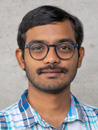
ANNAPUREDDY, Ravinithesh Reddy
(Doctoral Researcher)
- website


GATTI, Martina
(Research Intern)


SINGH VIRK, Renuka
(Research Intern)


Alumni

Please note that this list is not exhaustive.

  • ABDALLAH, Rafic
  • ALONSO DEL BARRIO, David
  • ARAN, Oya
  • AVCI, Umut
  • BIEL TRES, Joan Isaac
  • BONTEMPELLI, Andrea
  • BOUTON-BESSAC, Emma
  • BROS, Victor
  • CAN, Gulcan
  • CHAVANE, Cécile
  • CHÁVEZ-MARTÍNEZ, Gilberto
  • CORREA, Salvador
  • DO, Trinh-Minh-Tri
  • FARRAHI, Katayoun
  • FINNERTY, Ailbhe
  • FORNAROLI, Alessandro (Filippo)
  • GARG, Nikhil
  • HARRINGTON, Meghan
  • HASSOUNE, Hamza
  • HU, Rui
  • HUANG, Zhuosheng
  • JAYAGOPI, Dinesh Babu
  • JIANG, Shasha
  • LI, Junhong
  • LIN, Yuanhui
  • MÄDER, Aurel (Ruben)
  • MARCOS RAMIRO, Alvaro
  • MASSÉ, Benoit
  • MEDINA RIOS, Luis Emmanuel
  • MOHAN, Nitin
  • MONTOLIU COLAS, Raúl
  • MOZO, Rafael
  • MURALIDHAR, Skanda
  • NEGOESCU, Radu-Andrei
  • NGUYEN, Laurent
  • NIKRAY, Tiyam
  • OKADA, Shogo
  • PARRA ESPINOZA, Mario
  • PHAN, Trung (Thanh)
  • POZO PEREZ, Ada Laura
  • RADUCANU, Bogdan
  • RESCALA, Paula Dolores
  • ROMAN RANGEL, Edgar Francisco
  • SAINT-SUPERY, Santiago
  • SAJADMANESH, Sina
  • SANTANI, Darshan
  • TAVERNIER, Clara
  • THATTAGUPPA CHITTARANJAN, Gokul
  • THOMAS, Chinchu
  • VAUTHEY, Adrien
  • VLASENKO, Bogdan
  • XI, Lei
  • YELA BELLO, Jenny Paola
  • ZHANG, Dong

Active Research Grants

Past Research Grants