A Risk Assessment Model For A More Comprehensive Study Of Risk Factors
The Neuro-symbolic AI group, led by research scientist André Freitas with the support of postdoctoral researcher Maxime Delmas, partnered with Basinghall Analytics to design an AI-powered risk assessment platform. The objective was to evaluate climate-related impact drivers in order to support evidence-based decision-making.
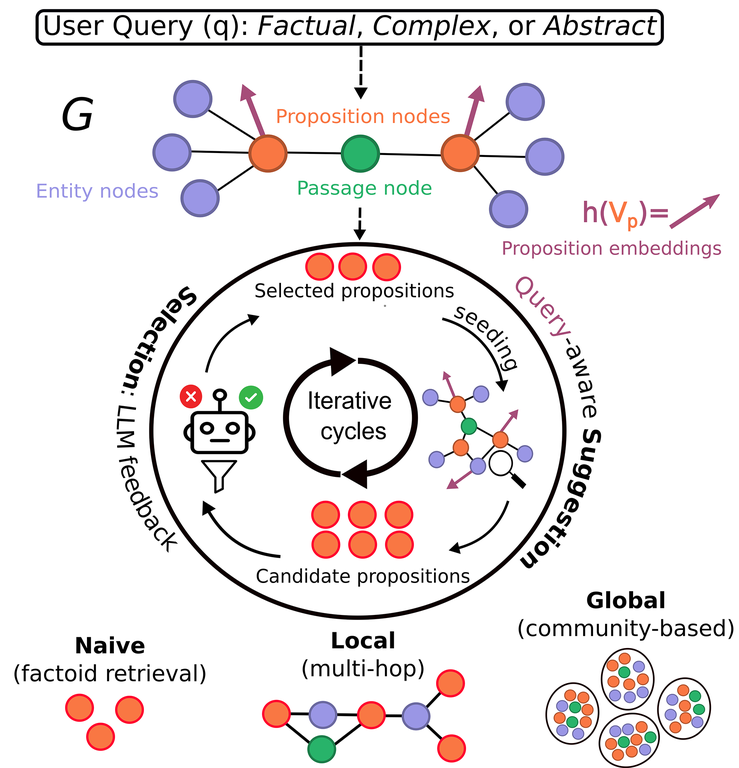
The resulting platform is built on a graph-based Retrieval-Augmented Generation (RAG) architecture. It allows users to build their own knowledge base and interact with the system through queries [1]. By analyzing large and diverse data sources, the system can answer complex factual questions, support step-by-step reasoning, and address more abstract issues by gathering and combining evidence from a carefully curated set of authoritative climate and financial reports, such as those produced by the Intergovernmental Panel on Climate Change (IPCC) and the Network for Greening the Financial System (NGFS).
“Our initial discussions with potential clients regarding this solution has shown good traction. Companies are interested in including in their workflow insights that are based on traceable facts, leverage non-obvious connections via a knowledge graph, and minimize hallucinations. For example, insights derived from a large collection of long documents on climate change (e.g., IPCC) allow companies to find risks and opportunities they are facing due to climate change and then build scenarios for the next step of quantitative modelling. Working with Idiap was an enriching experience, from the level of expertise to flexibility of approach and openness to new ideas,” says Nasir M. Ahmad, managing partner at Basinghall Analytics.
This project shows how transparent reasoning and verifiable evidence can strengthen organizations’ ability to navigate climate‑related and economic uncertainties. The collaboration between Idiap and Basinghall Analytics ultimately highlights the transformative potential of AI in understanding complex landscapes and supporting more informed strategic decisions.
——
Related resources:
[1] Github page: https://github.com/idiap/ToPG
[1] Paper: https://www.arxiv.org/pdf/2601.04859