As wolf populations continue to expand across European mountain regions and into surrounding lowland areas, generating renewed challenges for both wildlife conservation and pastoral activities, the Idiap Research Institute and the OPPAL Association have joined forces to develop a non-lethal monitoring solution designed to prevent livestock predation.
In a rapidly evolving business landscape, companies are exposed to a wide range of risks, from market volatility to technological and environmental disruptions. To address this complexity, AI-driven tools are increasingly being adopted. A recent project supported by Innosuisse, carried out in collaboration with Basinghall Analytics, focused on advancing this approach.
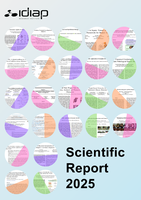
Idiap’s scientific report is now available.
Several publications were recently presented at NeurIPS 2025, one of the premier annual conferences on AI and machine learning. They cover advances in face recognition, large language model (LLM) training, out-of-distribution detection, and bioacoustic analysis, reflecting the wide range of expertise at Idiap.
Idiap PhD graduate Anshul Gupta has received the 2025 PhD Thesis Distinction in Electrical Engineering (EDEE) from EPFL.
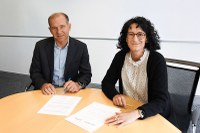
Idiap and EPFL have renewed their strategic alliance for the 2025–2028 period, further reinforcing a long-standing collaboration grounded in complementary expertise and shared objectives.
Idiap is delighted to welcome Elena V. Epure as a new Research Scientist beginning February 1st, 2026.
The Idiap Research Institute, in collaboration with the Universities of Lausanne and Neuchâtel, and cross-sectorial impact partners including the Initiative for Media Innovation (IMI), the public broadcaster RTS, Nagravision/Kudelski, and SICPA, have received support from the Hasler Foundation and the Mercator Foundation for an interdisciplinary project designed to reinforce the resilience of democracy in Switzerland as part of the "Digitalisation and Democracy" Program.
The Institute is delighted to welcome Janna Hastings as a new Senior Research Scientist, beginning January 1, 2026.
The Idiap Research Institute is collaborating on an ambitious multidisciplinary project that brings together biometrics, cultural history, and art history. The goal is to analyse and identify the faces depicted in 18th-century artworks, including a famous drawing by Jean-Étienne Liotard.
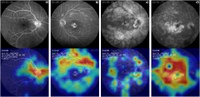
A joint research with the Jules Gonin Eye Hospital aims to develop a medical tool to evaluate patients suffering from uveitis, an eye condition that can cause severe visual impairment and potentially lead to blindness.
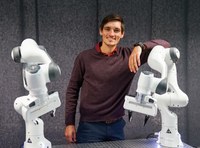
James Hermus, a postdoctoral researcher in the Robot Learning & Interaction Group at the Idiap Research Institute, has been awarded the highly competitive four-year Ambizione Grant from the Swiss National Science Foundation (SNSF).
The IEEE Biometrics Council has recognized Hatef Otroshi Shareza, postdoctoral researcher in the Biometric Security and Privacy group at Idiap, with the Best Doctoral Dissertation Award for the outstanding quality and impact of his research.
From September 26 to October 5, step into the fascinating world of artificial intelligence with drozBot, Idiap’s portraitist robot, at the Innothèque during the Foire du Valais!
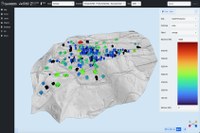
Idiap researchers Jerôme Kämpf and David Geissbühler together with HES-SO Valais/Wallis research scientists have conceived a platform to understand and manage energy consumption in Valais region of Switzerland.
The 14th edition of the Idiap Create Challenge (ICC) concluded after nine days of intense coding, inspiring talks, and enjoyable social events.
Gaze is a fundamental indicator of attention and interest, and a non-verbal cue involved in communication and social signaling, a key element across various domains such as human-computer interaction, robotics, and medical diagnosis, notably in Autism Spectrum Disorders (ASD) assessment. Researchers at Idiap have developed AI systems that significantly improve 3D gaze estimation in real-world environments, enabling gaze-aware systems to operate in such situations.
James Henderson, senior research scientist at the Idiap Research Institute, has been awarded a prestigious Advanced Grant from the European Research Council (ERC) for his project BALM. This recognition highlights the excellence of his work in artificial intelligence (AI) and supports the development of innovative approaches in natural language processing (NLP).
We are pleased to present our 2024 Annual Report.
Oskar Wysocki, a postdoctoral researcher at Idiap, has been awarded a BRIDGE Proof of Concept grant and secured support from The Ark. These funds will enable the creation of his startup, which aims to revolutionize fleet management using AI.
 Idiap and OPPAL Association Launch WolfCam to Reduce Human–Wolf Conflict