How is it possible for people with bad intentions to get access to data from our smartphone or our GPS?
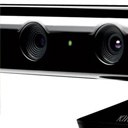
Kenneth Funes, whose project “Eyeware” was amongst the winners of the ICC’2015, is currently founding the start-up Eyeware in Martigny (Valais). It develops gaze and interaction technologies based on his PhD work done in the Idiap Perception and Activity Understanding group. The EyewareAssit system allows interacting with a computer via the head and facial gestures, and is particularly aimed at people with paraplegia who are unable to use a standard keyboard or mouse.
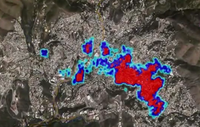
Darshan Santani presented the SenseCityVity project at the Tech4Dev International Conference held at EPFL on May 2-4 2015.
Recapp IT and KeyLemon, two Idiap spin-offs, have contributed to the development of the new TV Box of Swisscom by allowing for the first time the voice recognition of Swiss-German dialects.
Developping innovative solutions to foster learning in education and to increase employability: this is the project of Unidistance, Idiap Research Institute and Klewel company, based in Brig and in Martigny. This project will strengthen the Valais leading position in the field of distance education and related technologies.
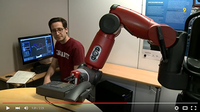
Dr. Sylvain Calinon, head of Idiap’s Robot Learning & Interaction group, receives Romain Boisset, reporter for the Canap9 TV channel. They demonstrate how Idiap’s Baxter robot learns by demonstration.
Each week, Bilan magazine proposes three inspiring start-ups in which to invest, based on its 2016 selection. Currently, the spotlight is on the young Valaisan start-up Recapp.
Anemomind, winner of the ICC’2014, launches a new application “Anemomind Connect” that allows mariners worldwide to better understand their sailing boat. The application is a 100% swiss-made.
The Valais start-up Recapp, founded in March 2014, launched this spring, together with Idiap, two ambitious projects in the domain of voice recognition and data transcription.
Prof. Daniel Gatica-Perez was mentioned in The New York Times in connection with a new crowdfunded project on mobile sensing in the US.
The SenseCityVity project on mobile crowdsourcing, urban perception, and collective action was featured on EPFL Flash.
Idiap published a book chapter entitled “Face Recognition in Challenging Environments: An Experimental and Reproducible Research Survey” appearing in the Springer book “Face Recognition Across the Imaging Spectrum”.
The SenseCityVity project was presented at the Essential Talks Series organized by the EPFL Center for Cooperation and Development on March 3 2016.
BioWatch, whose flagship product is a biometric identification system integrated into the buckle of a watchband that enables the secure authentication of a person by detecting the unique pattern of veins on the wrist, has captured the attention and the interest of the Swiss watch industry.
After 4 years of development, the BEAT platform is now available for download as an open-source project, under the Affero GNU GPL version 3.
Voice identification, facial recognition, fingerprint reading or heartbeat analysis: biometric identification methods will be used more and more this year on mobile phones and online payment platforms at the expense of the usual password.
With regard to devices using voice control, the Swiss German population has so far been left out in the cold. At the best, smartphones, smart TVs and other tools of this kind understand High German, but have no chance when the Swiss German dialect is concerned. But this will change soon.
DexROV is a robot of a special kind. This underwater robot is destined to take the place of human divers for tasks in very deep water (up to 1’300 meters under the sea). The Idiap Research Institute in Martigny is in charge of developing the algorithms that will help teleoperating the two arms of this robot.
Idiap published on Feb 18 2016 a PCT patent on biometric vein anti-spoofing (also called presentation attack detection) under the reference WO/2016/023582.
The SenseCityVity project (Idiap-IPICYT) was featured on Mexican TV news.
 The security of sensitive information: Prof. Hervé Bourlard interviewed for RTS’ radio show “CQFD”